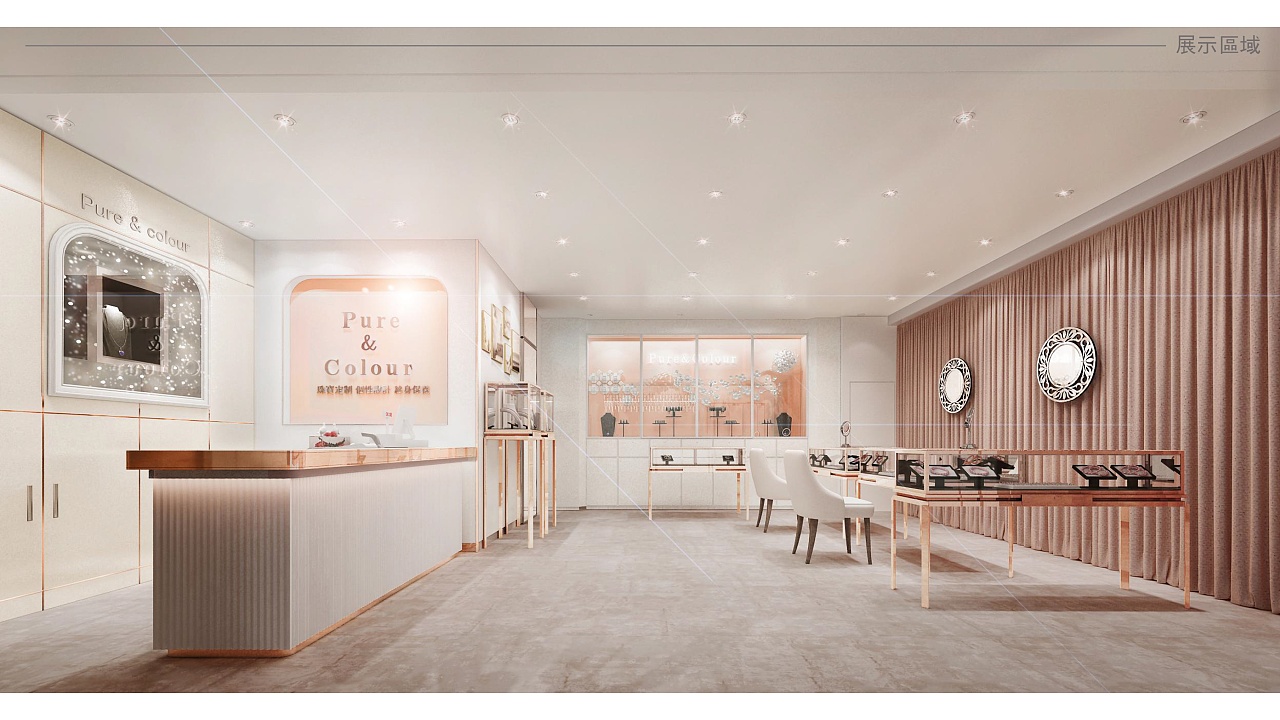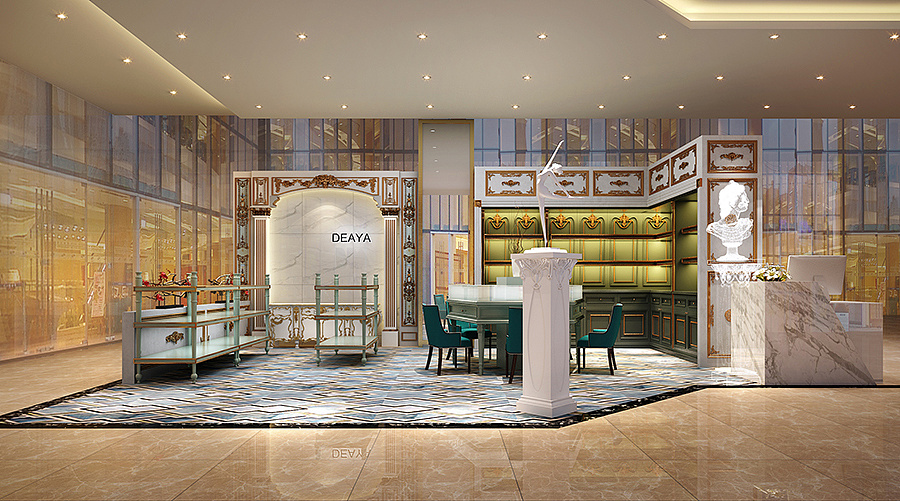
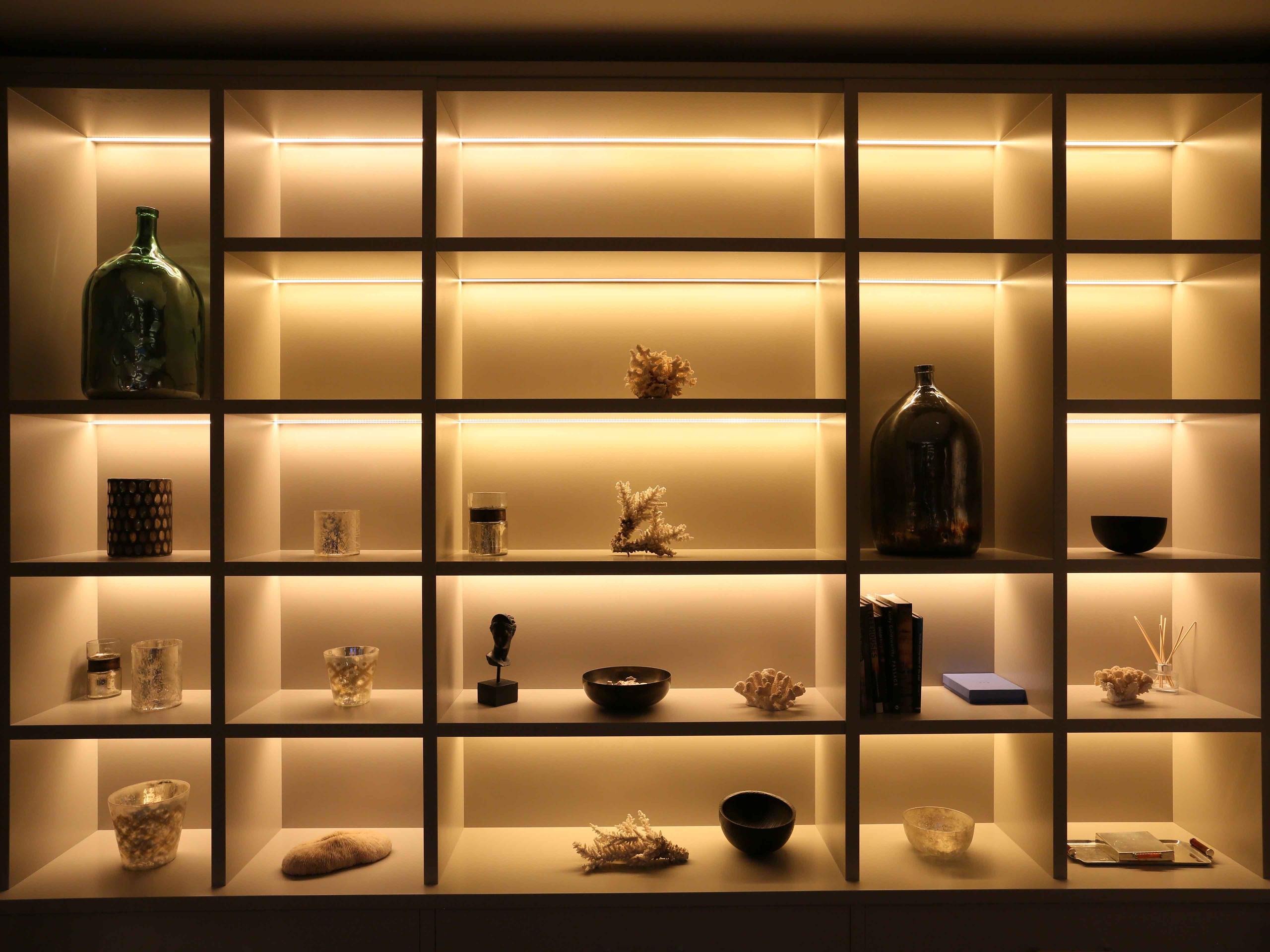
A retail store owner in Toronto asked us for custom display cabinets with integrated LED light strips: new wall cabinets and counters, designed around their products, produced in our factory, shipped to the store, and installed on site by our Toronto team. That part of the project went the way fixture projects normally go. Drawings were approved, the cabinets were built and packed, and they were fitted and levelled in the store with the lighting connected and tested.
What surprised the owner was the rest of the quote. Once the existing lights had to come down, the ceiling patched, the walls repainted, and the electrical supply checked for the new cabinets, the on-site trades added up to more than the cabinets themselves. That is common in commercial fit-outs, and it is worth understanding why before you compare quotes.
Why the cabinets are rarely the expensive part
A display cabinet is a factory product. Its cost is predictable: materials, glass, hardware, LED components, finishing, packing, and freight. Site work is different. Every trade that touches a commercial space has to check existing conditions, work to code, and take responsibility for the result. That responsibility is what you are paying for.
On the Toronto project, five areas made up most of the on-site cost.
1. Electrical: checking and testing, not just connecting
Commercial electrical work is not a matter of adding an outlet for the LED driver. Before anything is connected, an electrician needs to check the existing circuits, voltage, load, and whether the new cabinet lighting and any other equipment match what the panel can safely supply. If the voltage is low, lighting and equipment may not run properly. If the wiring, load, or voltage has a problem, there is a real risk of overheating or fire.
This is why electrical quotes on store projects look high. Most of the cost is inspection, testing, and liability rather than the physical connection. In a commercial space, an electrician who takes on the work usually cannot certify only the short run they added. They need to confirm the related circuits are safe as a whole.
2. Ceiling: removed lights leave more than holes
When existing ceiling fixtures are removed to make room for new cabinet lighting or a new layout, they leave cut-outs, mounting marks, and uneven surfaces. Each of those needs to be patched, levelled, and repainted, and sometimes the remaining light positions have to be reorganized so the ceiling looks intentional. The job is much larger than taking down a few lights.
3. Painting: repairs turn into a full repaint
Once walls or ceilings have been cut, patched, or altered, spot painting rarely blends in. Most stores end up repainting the affected walls or the whole space. In stores with high ceilings, a full repaint is a significant amount of labour on its own.
4. Wall changes: permits and approvals
If the layout calls for removing a wall, building a new partition, or any larger structural change, the work may need a building permit, landlord or property management approval, and compliance with commercial construction requirements. It cannot simply be started on the day the cabinets arrive, and the approval time needs to be built into the schedule.
5. Flooring and finishing details
Removing old fixtures and installing new ones changes where floors, walls, baseboards, and cabinet edges meet. Those junctions usually need new trim, flooring repair, or touch-ups so the finished store does not show where the old fixtures used to stand.
Two ways to scope the project
For our commercial clients in the Greater Toronto Area, we can carry the whole scope: cabinets plus the renovation work around them, with our on-site work covered by $2,000,000 commercial general liability insurance and WSIB coverage. That gives the owner one point of responsibility, which is often the right choice for a full store refresh.
When the total quote is higher than the budget, the simplest way to bring it down is to narrow our scope. We take responsibility for the display cabinets: design, production, shipping, and installation. The owner engages their own licensed electrician and other trades for the electrical checks, light removal, ceiling patching, painting, flooring, and any wall changes. Each side then has a clear and separate area of responsibility.
| Work item | What it involves | Cabinets-only scope |
|---|---|---|
| Display cabinets | Design, drawings, factory production, LED integration, packing, freight | Elite Fixtures |
| Cabinet installation | Placement, levelling, fixing, lighting connection to the supplied outlet, final assembly | Elite Fixtures |
| Electrical | Circuit, voltage, and load checks, new outlets or feeds, certification | Owner's licensed electrician |
| Ceiling | Light removal, patching, levelling, repositioning of remaining fixtures | Owner's contractor |
| Painting | Repairs and repainting of affected walls and ceiling | Owner's contractor |
| Wall changes | Demolition, new partitions, permits, and landlord approvals | Owner's contractor |
| Flooring and trim | Floor repair, baseboards, and finishing at cabinet junctions | Owner's contractor |
What to ask before you decide
- Has anyone checked the electrical panel yet? If not, get that done first. It affects both scope options.
- Do the existing ceiling lights need to come down? If they can stay, the ceiling and painting costs drop sharply.
- Does the layout change any walls? If yes, ask about permits and landlord approval before setting an opening date.
- Who is responsible for each junction? Agree in writing where cabinet installation ends and site finishing begins.
- Is the site work insured? Whoever performs it should be able to show liability insurance and WSIB coverage.
Planning a similar project
If you are planning LED display cabinets, showcases, or a store refresh in Toronto or the surrounding GTA, send the store dimensions, product categories, and a few site photos through the project quote form. We will quote the cabinets and tell you clearly which site work we recommend keeping in our scope, and which parts you can hand to your own trades. See the display cases and glass display cabinets category and our commercial renovation and store fit-out service for more detail.
FAQ
Why is the electrician's quote so high for a few LED display cabinets?
In a commercial space the electrician has to check the existing circuits, voltage, and load, confirm the related wiring is safe, and take responsibility for the certified result. Most of the cost is inspection, testing, and liability rather than the physical connection.
Can Elite Fixtures supply and install the cabinets only?
Yes. Many owners choose a cabinets-only scope: we design, produce, ship, and install the display cabinets, and the owner arranges their own electrician, painter, and other trades for the site work.
Do I need a permit to install new display cabinets in Toronto?
Freestanding or wall-fixed cabinets usually do not need a permit on their own. Removing or building walls, changing structure, or altering electrical systems may require permits and landlord approval. Confirm with your contractor and property manager before setting a schedule.
Is your on-site work insured?
Yes. On-site work by Elite Fixtures in Ontario is carried out with $2,000,000 commercial general liability insurance and WSIB coverage in good standing.