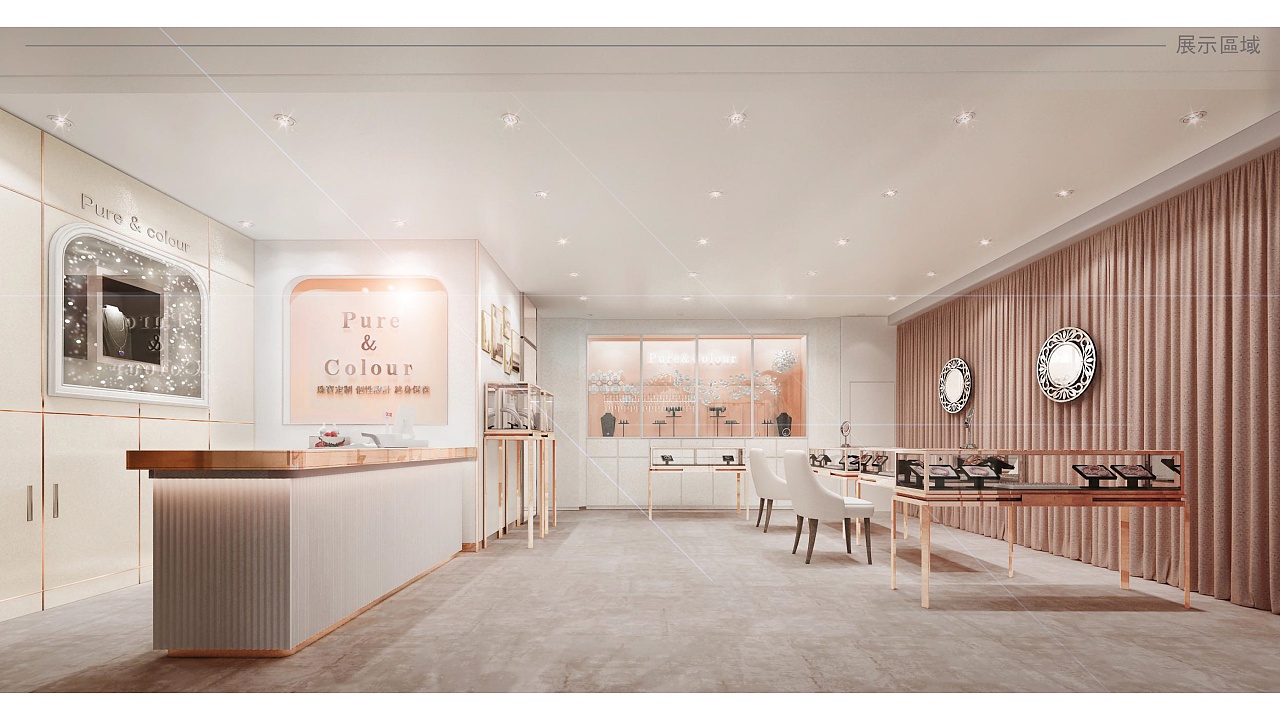
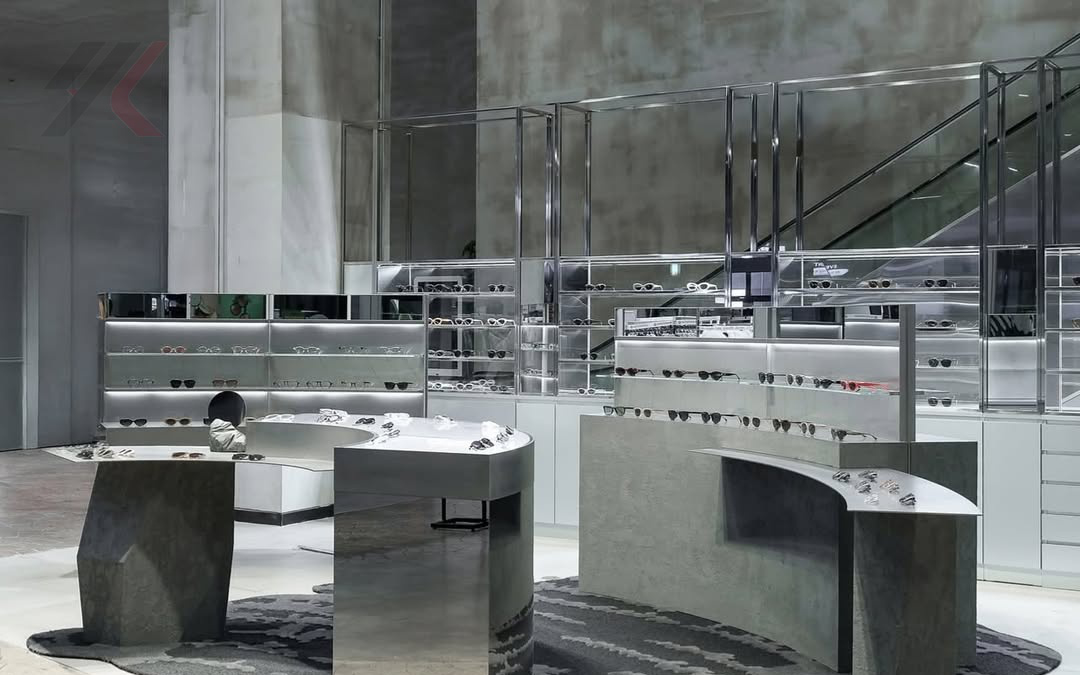
Tower, counter and wall case: choosing the format
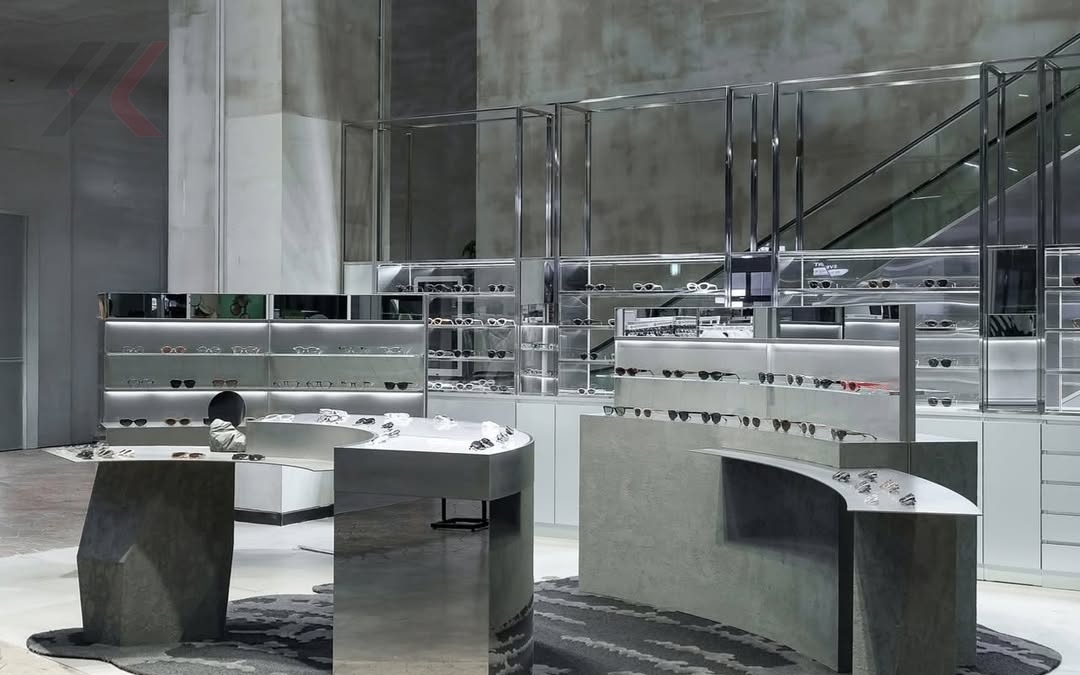
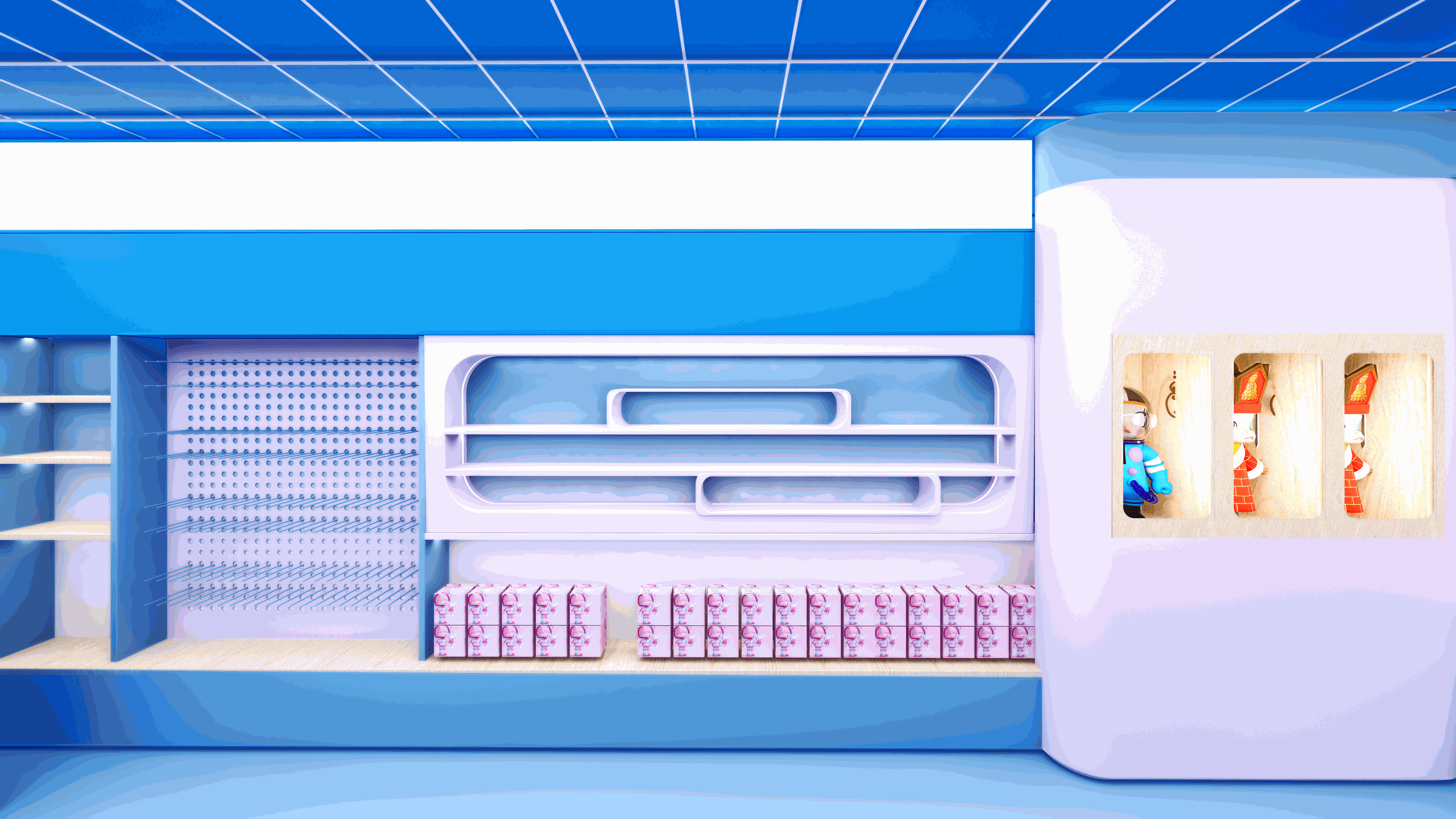
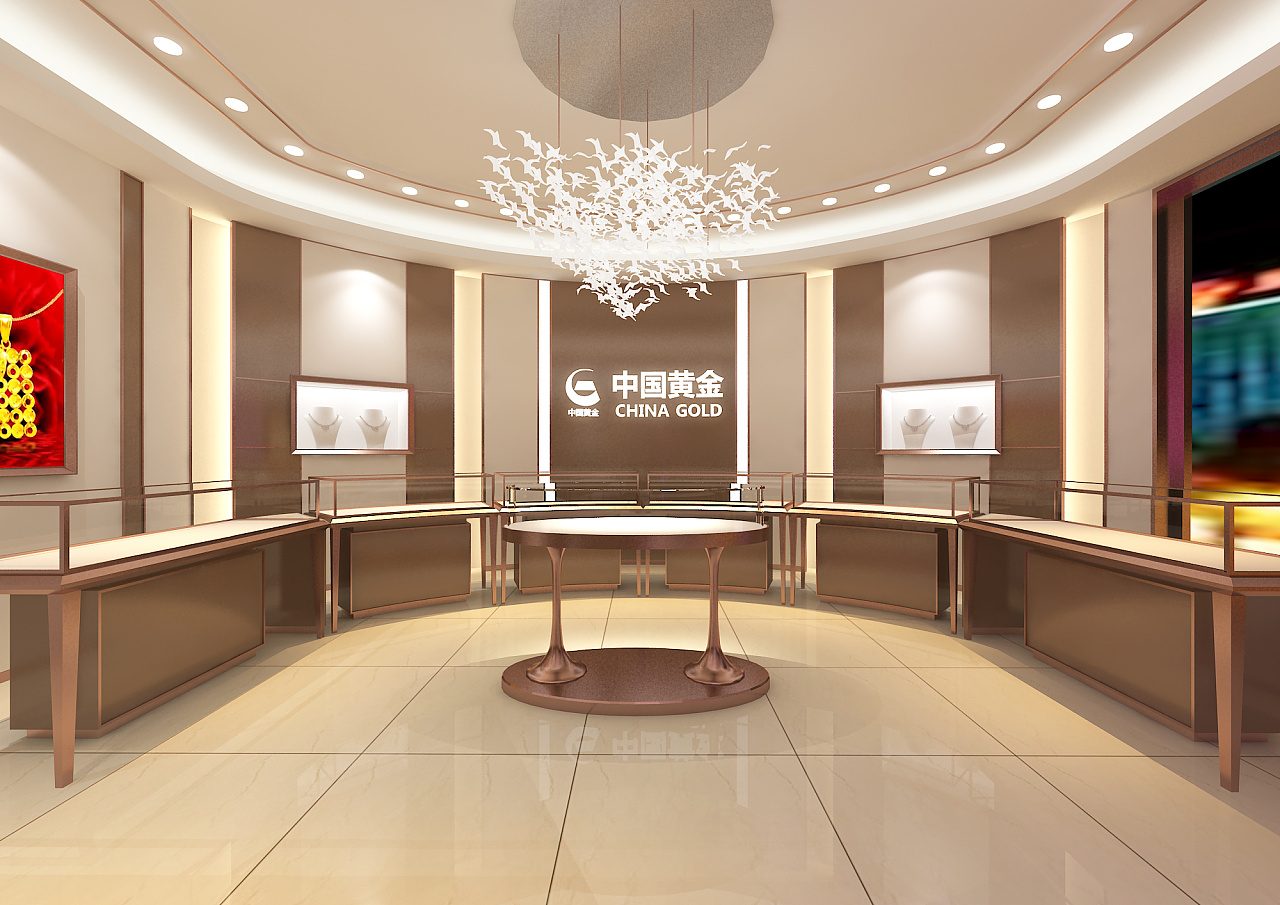
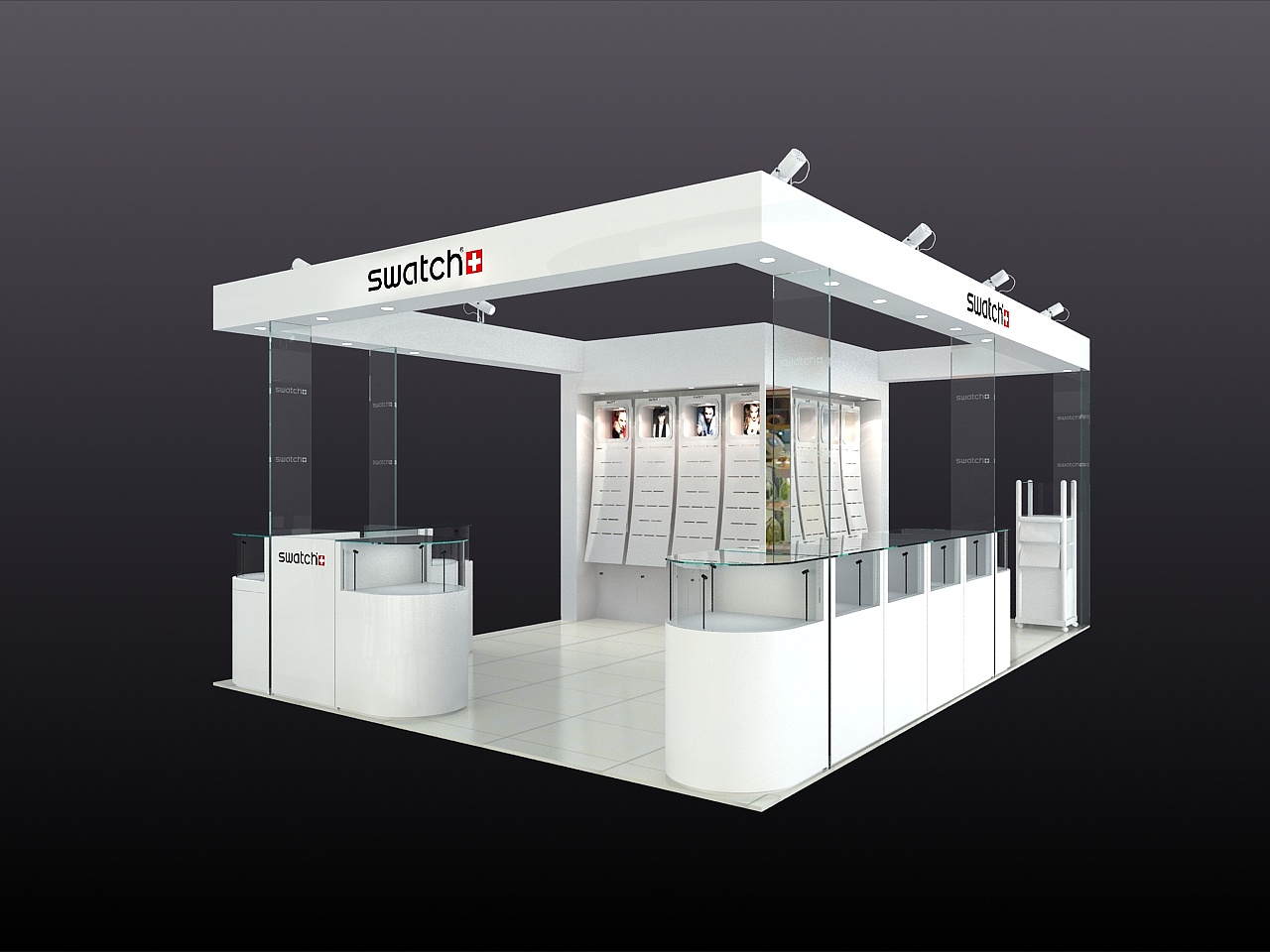
Most projects come down to three formats and the ratio between them. A counter case sits at working height, is viewed from above and from the front, and carries storage underneath. A tower or vitrine is tall and usually four-sided, read from a distance as well as up close. A wall case is shallow, fixed against a wall, and is the cheapest way to add display volume to a small unit.
Floor area and sightlines decide the mix more than taste does. A narrow mall unit runs counters plus wall cases because it cannot lose floor. A larger store uses towers to break up the room, usually kept below eye level so sightlines stay open.
A fourth format is the low table or plinth case, used for a single object or a small group — common in museum display cases and increasingly used for retail launches. Single-unit detail is on our luxury LED glass display case page.
- Counter case: working height, storage below, densest display
- Tower or vitrine: tall, four-sided, hero product and category markers
- Wall case: shallow, no floor used, cheapest added display volume
- Table or plinth case: low, single object, launches and exhibits
Glass, thickness and where the money goes
Glass is the biggest variable between two quotes that look identical on paper. Tempered glass is the default: heat-treated so it resists impact and breaks into blunt fragments. Laminated glass bonds sheets to an interlayer and holds together when struck. Low-iron glass removes the faint green cast that standard float shows in a thick edge or over a deep case.
Thickness follows span and duty rather than one figure per case. Around 5 mm to 6 mm suits short shelves and light product. Around 8 mm is the working choice for a glass top customers lean on and for doors. Around 10 mm appears on long unsupported spans and tall panels. A quote listing one thickness for every panel is usually over-building shelves or under-building the top.
If you can afford one upgrade, spend it on low-iron for the panels customers look through. Tempered glass cannot be cut or drilled after tempering, so every lock cut-out and cable notch is fixed at drawing approval.
Access, dust sealing and how cases age
How a case opens affects security, sealing, cleaning and the space it needs. Sliding doors take no swing space and cost least, but they seal poorly against dust and the track collects grit until the door drags. Hinged doors seal better and accept a firmer lock, but need clearance to swing — a real constraint in a tight staff aisle. Lift-up lids on gas struts give full access to a shallow case, and the strut is a wear part.
Decide access per unit, not per project. A tower opened twice a year and a counter opened fifty times a day should not carry the same hardware.
Dust is the slow failure in glass display. Gasketed doors, continuous seals at the glass-to-base joint and grommeted cable entries all reduce how often the interior has to be opened. Where sealing genuinely matters, it changes the whole design — fewer opening points and compression set by the latch — which is normal in exhibit work.
- Sliding: no swing space, lowest cost, weakest sealing
- Hinged: better seal, firmer locking, needs swing clearance
- Lift-up on struts: full access to shallow cases, strut is a wear part
- Removable front or lift-off hood: occasional access, cleanest look
Lighting, drivers and the part nobody quotes
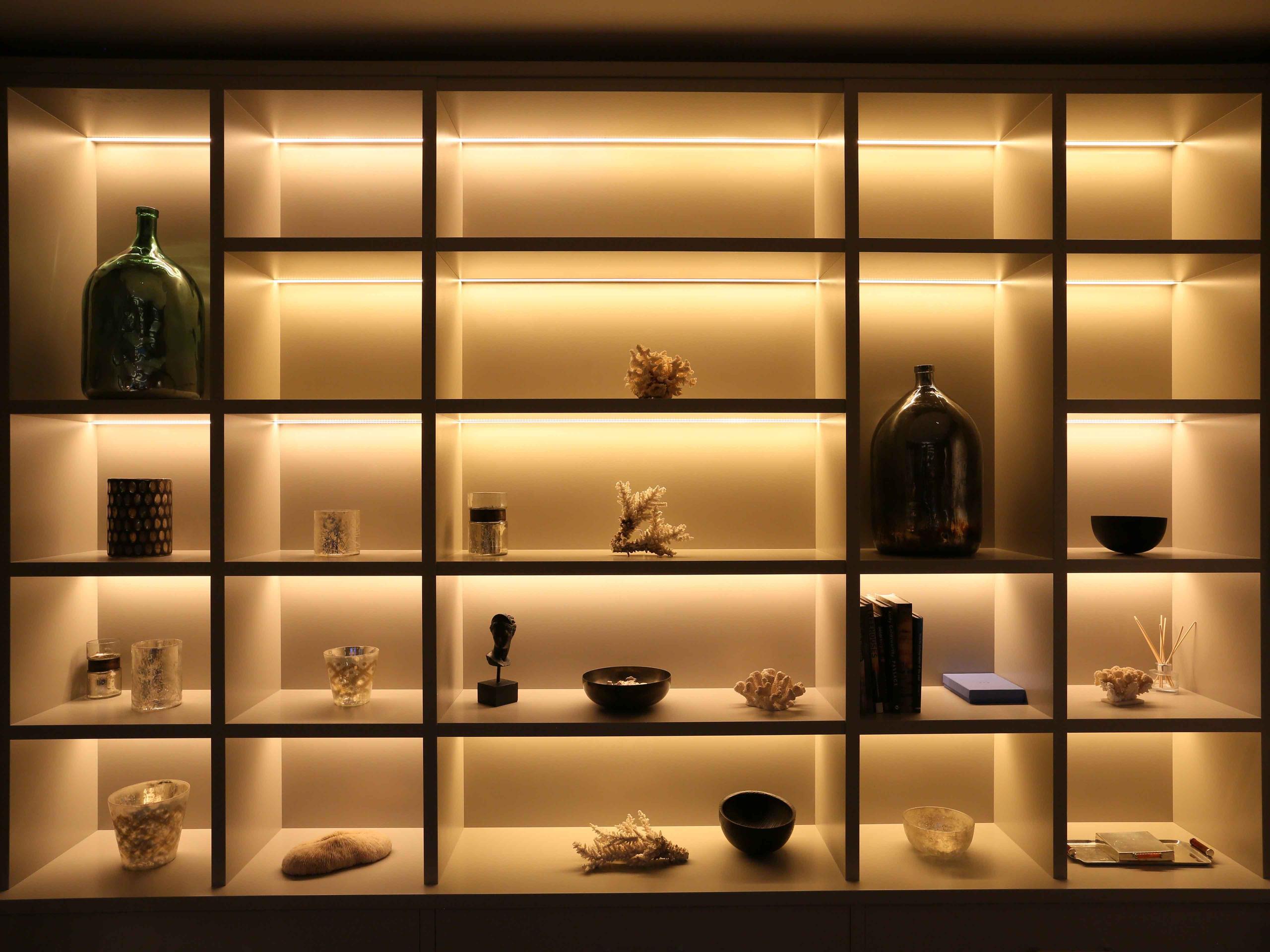
Two layers cover almost every case. LED strip in a recessed aluminium channel with a diffuser gives even fill and hides the source, so the customer sees lit product rather than a row of dots in the glass. Small spot fittings give a directional beam that puts sparkle on stone, metal and glass. Fill alone looks flat, spots alone look patchy.
Colour temperature runs from roughly 2700K to 4000K. Warm flatters gold, wood and cream interiors; neutral suits a mixed assortment; cooler reads crisp for white metals and electronics. Pick one temperature for the whole store, and where colour accuracy is the purchase decision ask about colour rendering too.
The part that separates a good case from a cheap one is where the driver lives. A driver sealed in a cabinet with no airflow runs hot and fails early, and replacing it means dismantling the case. Drivers belong in a ventilated base with service access.
Planning a package rather than a single case
Most stores buy a family: a counter run, a wall case run, one or two towers and a cash wrap. Quoting them together costs less than quoting them separately, because one finish batch, one hardware order and one glass order cover all of them and crating is planned as a single load.
Build on a repeated module wherever possible. Fixed module dimensions and finish codes mean a later extension matches; a set of one-off sizes makes a second phase effectively a new project.
Decide which units are structural and which can move. Cases on levelling feet can be repositioned; cases anchored to a wall or built into a bulkhead cannot, so a store that resets its floor twice a year should keep the package freestanding. Layout work runs through our store design service, and freestanding formats sit in mall kiosks.
Comparing manufacturers, packing and delivery
The lowest quote is usually the one with the least written into it. Issue one specification — glass type and thickness per panel, low-iron or standard on visible faces, lock type and keying plan, lighting type, temperature and driver location, carcass and finish, hardware grade, crating method — and ask everyone to price that document. Then compare exclusions: freight terms, duty, spares, drawing revisions, installation and the site electrical connection are the items most often missing. Ask whether dimensioned shop drawings are produced before production; ours are described on the factory page.
Cases ship fully assembled wherever size allows, because glazing, lighting and alignment are more reliable in a factory than on a shop floor. Each unit is foam-wrapped, corner-protected and crated in a wooden export crate sized to it; loose glass travels in dedicated crates with interleaving, and oversized runs split into sections with a defined join. We build in Huizhou, China, and most North American orders move by sea freight. Check crate dimensions against the loading dock, lift car and narrowest doorway before ordering.
On site the work is uncrating, positioning, levelling on adjustable feet, joining sections and final connection by a local licensed electrician. Lead time depends on finish complexity, glass specification and order size and is confirmed after drawings are approved — see our lead time page. Buyers weighing an imported package against locally built cabinetry also look at custom millwork in Toronto.