Product Category

Jewelry showcases and boutique display systems built to elevate product value and selling comfort.

This category focuses on jewelry display counters, wall vitrines, glass towers, consultation tables, and coordinated showcase systems for boutiques, luxury accessory stores, and premium collection environments.

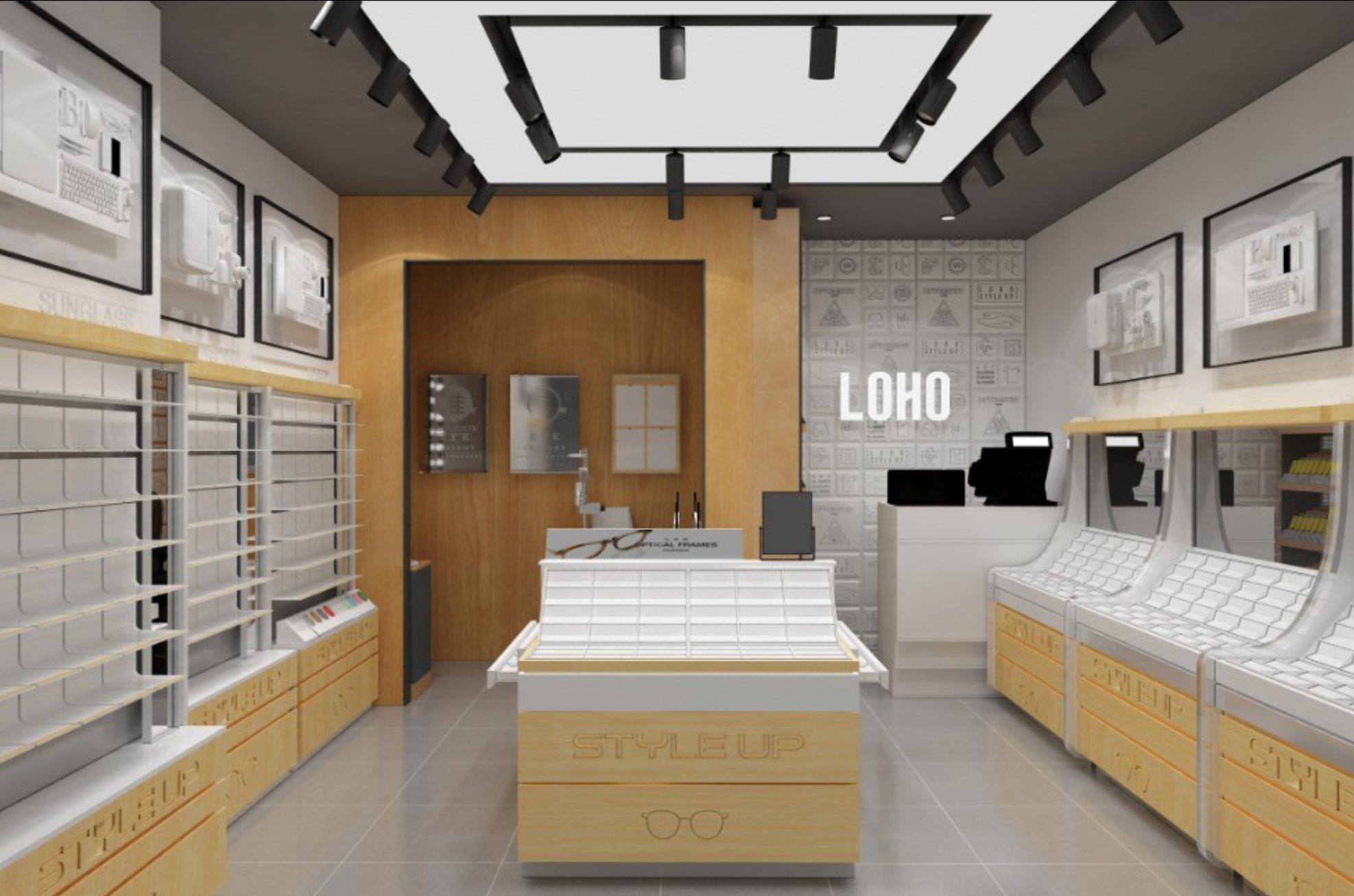
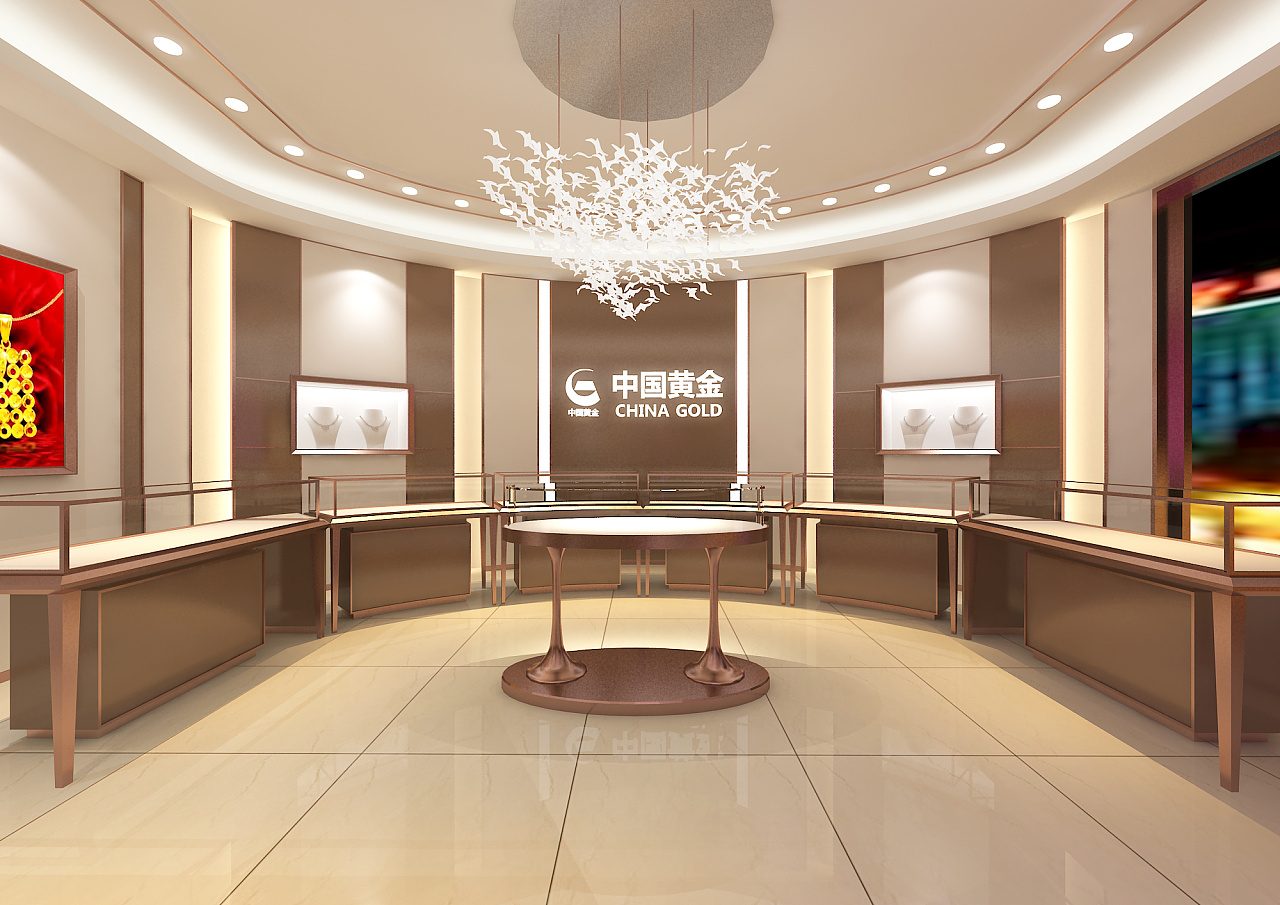
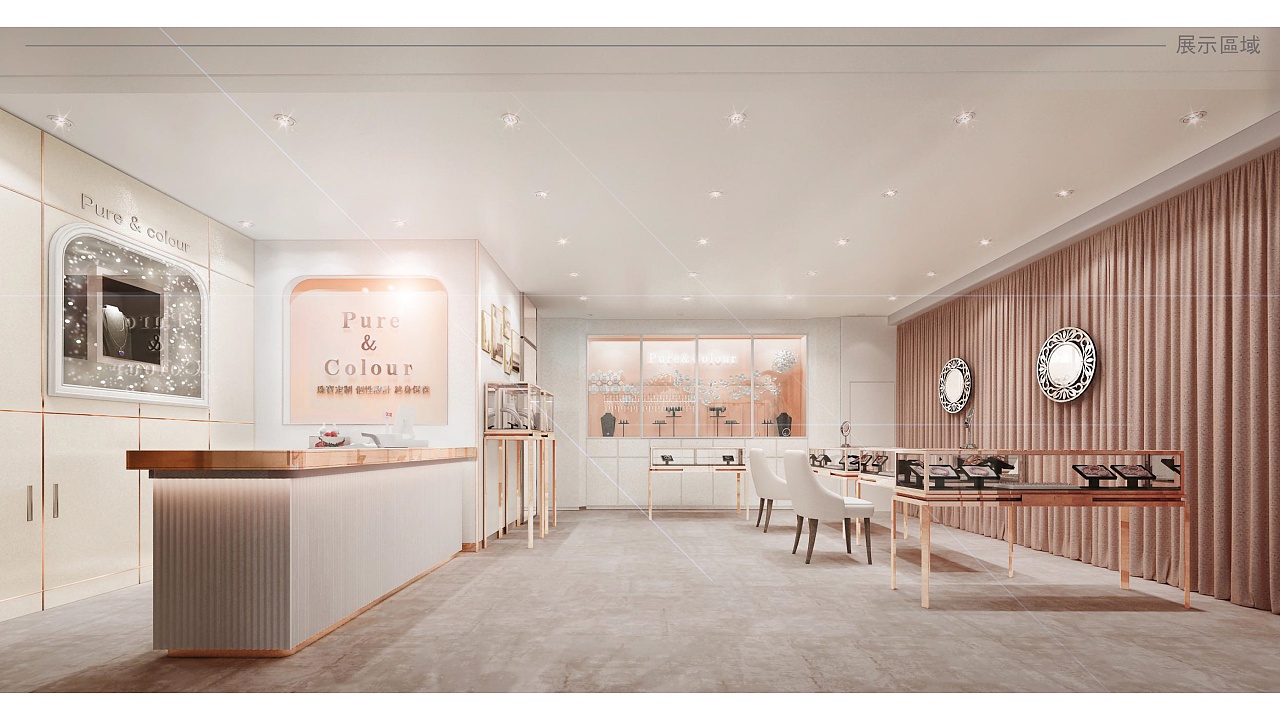
Jewelry category image showing custom retail fixtures by Elite Fixtures
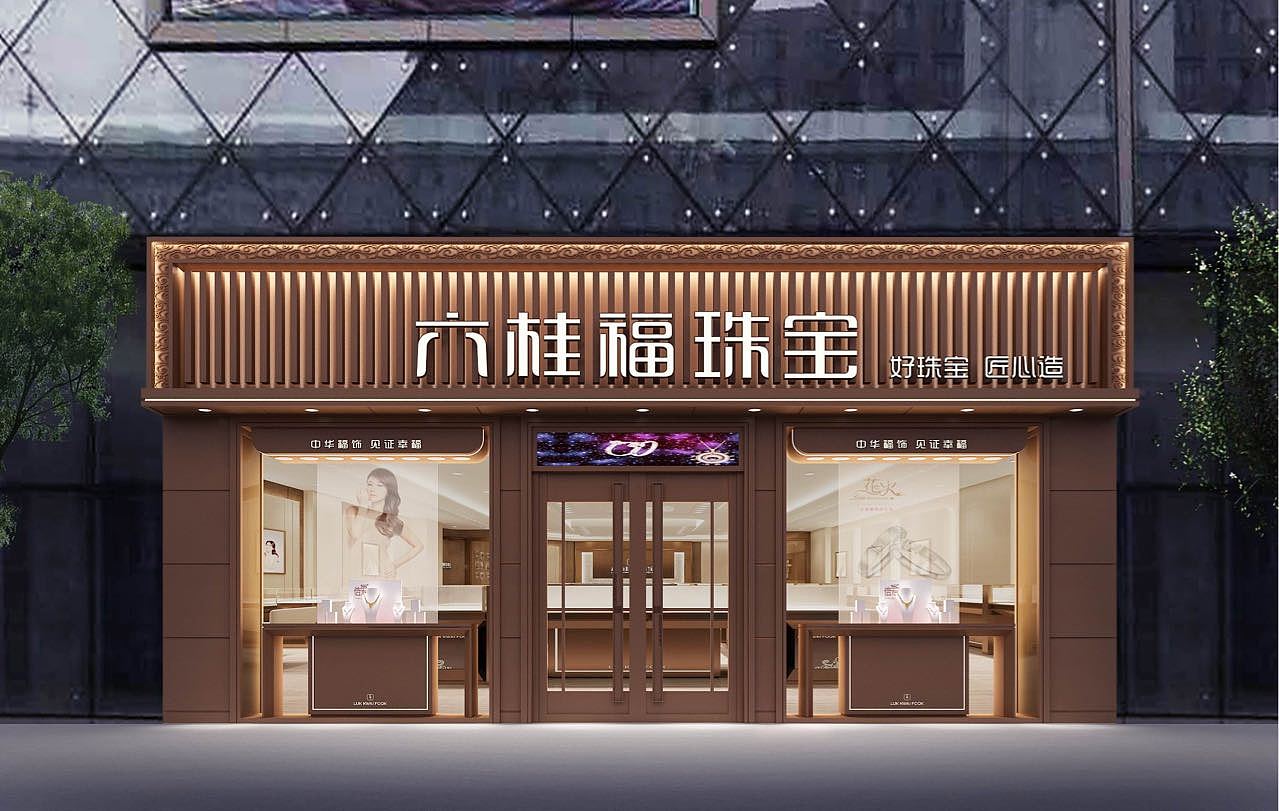
Jewelry store facade with illuminated window display cases

Jewelry

Elite Fixtures develops jewelry display systems that balance premium presentation, security, lighting, and practical staff access. The goal is to present fine products with more elegance while still supporting storage, cleaning, replenishment, and daily sales service.

Jewelry retail depends heavily on controlled presentation. Customers are judging craftsmanship, finish, scale, and value at close range, so the display system has to make those qualities easier to understand without overwhelming the product.

That means the right showcase package is not only about glass. It includes lighting placement, viewing angle, lock position, tray organization, concealed storage, and the rhythm between feature display and consultation space.

Quick details

Applications

Jewelry boutiques, Luxury accessory stores, Bridal retail, Collectibles display

Subcategories

Jewelry showcase counter, Glass tower showcase, Wall vitrine, Consultation display table

Deliverables

Showcase planning, Case detailing, Fabrication, Packing and installation guidance

Project types

Jewelry boutiques, Mall jewelry counters, Luxury accessory stores, Bridal and fine jewelry concepts

Request a Quote

Specific Products

Open a more detailed product page

Review detailed specifications, applications, gallery images, and quote requirements for products in this category.

Custom Jewelry Showcase Counter custom retail fixture by Elite Fixtures

Custom Jewelry Showcase Counter

A boutique jewelry showcase counter designed for illuminated presentation, concealed storage, and refined premium detailing.

View product

Product Focus

Custom Jewelry Showcase Counter fits this category best

Our most-quoted product in this category. Before opening the detail page, here is what most buyers want to confirm first.

Typical applications

  • Jewelry boutiques
  • Bridal stores
  • Luxury accessory retail
  • Mall jewelry counters

Key features

  • Supports closer premium presentation with lighting and controlled sightlines
  • Combines tray organization with clean concealed storage
  • Useful as part of a full jewelry boutique fixture family
  • Can adapt finish direction to cream, black, gold, or boutique-neutral palettes
What to send first

Jewelry category, Need for trays or drawers, Lighting requirement

Best next step

Open the detailed product page to review the gallery, product-level FAQ, and request a quote with clearer scope.

Videos

Jewelry showcases on video

Counters in production, a boutique walkthrough, switchable warm and cool lighting, and two motorized lift displays, from the Elite Fixtures YouTube channel.

Custom jewelry display counters in production. Curved jewelry counters with lit bases on our factory floor before crating.
Jewelry boutique showcase walkthrough. A jewelry boutique fitted with glass counters, wall cases and integrated LED lighting.
Jewelry showcase with adjustable colour temperature. One glass case switching between warm white for gold and cool white for diamonds.
Motorized jewelry display cases on remote control. Glass display cases raised and lowered with a three-button remote.
Walk-in closet island with a motorized jewelry display. A closet island whose lit jewelry display rises out of the top at one touch.

At a glance

Category specification summary

The details buyers ask for first, in one table.

Material Ultra-clear tempered glass, painted MDF, veneered cabinetry, metal trim, tray systems, and LED lighting
Display Type Jewelry counters, wall showcases, tower cases, island displays, and consultation tables
Security Lockable doors, concealed drawers, controlled staff access, and reinforced framing as needed
Lighting Integrated LED strips, focused shelf lighting, or boutique temperature tuning for premium display
Service Layout review, showcase customization, technical drawings, and production support
Project Scope Single boutique stores, luxury counters, branch upgrades, and full jewelry store packages
Materials Ultra-clear glass · Painted or veneered cabinetry · Brushed metal trims · Soft-close hardware · Jewelry tray inserts · Integrated LED channels
Finishes Warm white boutique finish · Champagne metal accents · Brushed gold details · Soft matte lacquer · Wood veneer counters · Luxury black or cream palette

What this category does well

  • Jewelry counters, wall vitrines, glass towers, tray-based showcases, and consultation-ready display furniture
  • Lighting strategies that improve sparkle, contrast, and material visibility without making the case feel crowded
  • Lockable construction with cleaner sightlines and concealed staff storage
  • Finish direction aligned with luxury boutiques, mall jewelry stores, and premium accessory concepts
  • Raises perceived product value
  • Supports secure daily selling
  • Improves visual clarity in premium environments

Project support

  • Boutique layout review
  • Showcase family planning
  • Lighting and tray coordination
  • Detailed drawings
  • Factory production
  • Shipping support

In Depth

Specifying jewelry: sizes, materials, and buying notes

The fixture types in a jewelry package

A jewelry fit-out is almost never one case. Most packages are built from five parts, and the skill is choosing how many of each. The counter run is where the sale happens. Wall vitrines carry the collection at eye level without using floor. A tower or island reads from all four sides and marks a category. A consultation table supports seated selling. The cash wrap is the unit buyers most often forget to quote.

The mix follows the format. A mall counter or concession is usually a counter run plus a back wall, because there is no floor to spare. A street-front boutique can afford a tower near the window and a table at the back. Single-fixture detail sits on our custom jewelry showcase counter page.

  • Counter run: selling position, densest tray display, staff-side storage
  • Wall vitrine: collection at eye level, no floor area used
  • Tower or island: four-sided hero display, kept low for sightlines
  • Consultation table: seated selling for bridal and high-value pieces
  • Cash wrap: transaction, packaging and daily consumables

How much display a store actually needs

Buyers usually start from floor area. The better question is how many selling positions you will staff. One person covers a few metres of counter; a longer run either leaves product unattended or makes staff walk. Two shorter runs set at an angle often sell better than one straight line.

Then count trays, not cases. Work out how many trays each category needs at the density you want, add the trays that go to the safe overnight, and the counter length follows. Sizing cabinetry first usually produces a dead zone at the back of the case.

Build on one repeated module so the package can be extended later with a matching unit. A set of one-off sizes cannot be extended, because nothing repeats. Full-floor planning runs through our store design service.

How product value changes the specification

Fashion jewelry, fine jewelry and bridal want different cases even in the same store. Fashion sells on browsing, so density and open display work in its favour and locking matters less. Fine jewelry sells on close inspection, so it wants fewer pieces, more clearance and better lighting control. Bridal is a seated conversation away from the door.

That shows in cost before any finish is chosen. A dense fashion display runs happily on standard tempered glass and simple locks. A fine jewelry counter is where low-iron glass and better hardware earn their money, because the customer's face is a hand's width from it.

Mixing both in one store is normal. Keep one finish family across the package and change the interior instead: denser trays and brighter fill on one side, sparser layouts and more accent light on the other.

Mirrors and lighting for stones and metal

Mirror is a jewelry material, not a decoration. A mirrored deck under a tray shows the back of a pendant without the customer picking it up, and mirror inside a shallow wall vitrine makes it read deeper. On a customer-facing front it just collects fingerprints.

Lighting needs two contradictory things: even fill so nothing sits in shadow, and directional punch so stones throw sparkle. Diffused LED strip in a recessed channel gives the first, small aimed spots give the second. Colour temperature between about 2700K and 4000K covers the category — warmer flatters yellow and rose gold, cooler makes diamonds and white gold read cleaner. Use one temperature across the store.

Ask about colour rendering as well as temperature, since how honestly a stone reads is the purchase decision. Plan case positions against window and ceiling light too; rotating a tower on a drawing is free, solving glare after delivery is not.
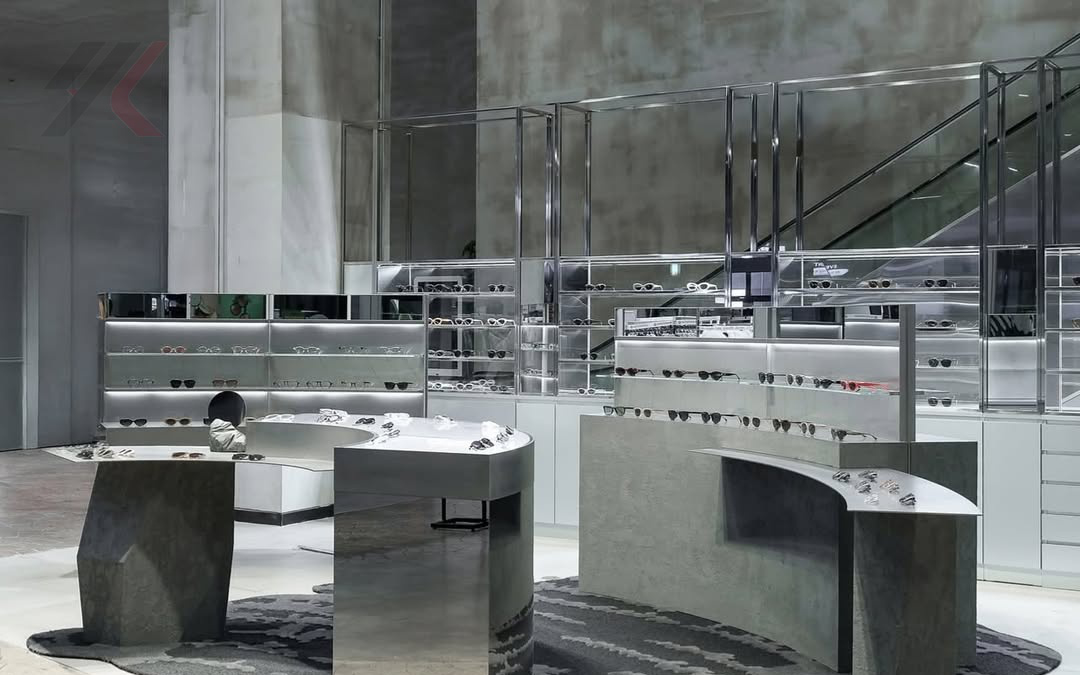
Glass jewelry display counters with staff-side storage
Fixed glazing to the customer, locking access to staff.

Adjustable lighting, lifts and motorized displays

Finish, glass and a safe used to be the whole specification. Buyers now ask for three more things at drawing stage: lighting that can be tuned to the collection, display decks that change height, and motorized units that raise or hide product at the touch of a button. Each one changes the cabinet, so each one is decided before production, not added after delivery.

A jewelry case usually combines a diffused LED strip in a recessed channel for even fill, small aimed spots for sparkle on stones, and a lit base that makes the counter float. Ask for high colour rendering (CRI 90 or above is the usual target for jewelry), dimmable drivers, and a driver position you can reach without dismantling the case. Where yellow gold and diamonds share a store, tunable-white strip lets staff change colour temperature by collection instead of committing to one.

Height-adjustable decks and risers let the same case hold a necklace bust one season and flat trays the next. Motorized lifts go further: a glass hood or display platform rises out of the counter on a remote or touch switch and lowers back into a locked carcass at closing. We build these for jewelry stores and for private walk-in closet islands, and the lift, the light and the lock are drawn as one system so cables, clearances and keying agree. Our guides to jewelry display case lighting and motorized jewelry display cabinets go into the detail.

  • LED strip in a recessed, diffused channel for even fill
  • Adjustable mini spots for sparkle on stones
  • CRI 90 or above, with dimmable drivers you can reach
  • Tunable white where gold and diamonds share a store
  • Height-adjustable decks, risers and tray positions
  • Motorized lift hoods or platforms on remote or touch control

Locking, staff-side storage and daily routine

The usual convention is fixed glazing facing the customer and lockable access facing staff, which designs out the easiest grab. Beyond that the questions are practical: how many staff carry keys, whether cases are keyed alike or separately, and which drawers stay locked during trading. All three are settled at drawing stage, because rekeying a delivered run is slow.

The habit that matters most is designing counters so complete trays lift out into a safe at closing. That needs full-extension runners, tray sizes matched to the safe shelves, and a route that does not cross the sales floor.

Many retailers also carry insurer requirements about what may stay on display overnight. Those come from the insurer and vary by policy — send the written requirement and we build the cabinetry to it. We will specify laminated glass, reinforced bases and better locks on request, but we make no burglary-resistance claims. A display case is not a safe.

Comparing quotes, spares and getting a package priced

Two suppliers can describe the same cabinet in the same words and build very different things. Write a one-page specification — glass type and thickness, low-iron or standard on visible faces, lock type, lighting temperature and driver location, finish type, tray count — and ask everyone to price that. Then check exclusions: trays, spares, freight terms, duty, installation and drawing revisions are where a low number loses its advantage. Our production and packing process is on the factory page.

Order spares with the first shipment. Tray linings and LED strip both drift between batches, and one mismatched case in a run of six is obvious. Clean with cleaner on the cloth rather than sprayed at the case, so liquid cannot run into a lighting channel or door track, and vacuum sliding tracks. Operating questions are on our FAQ page.

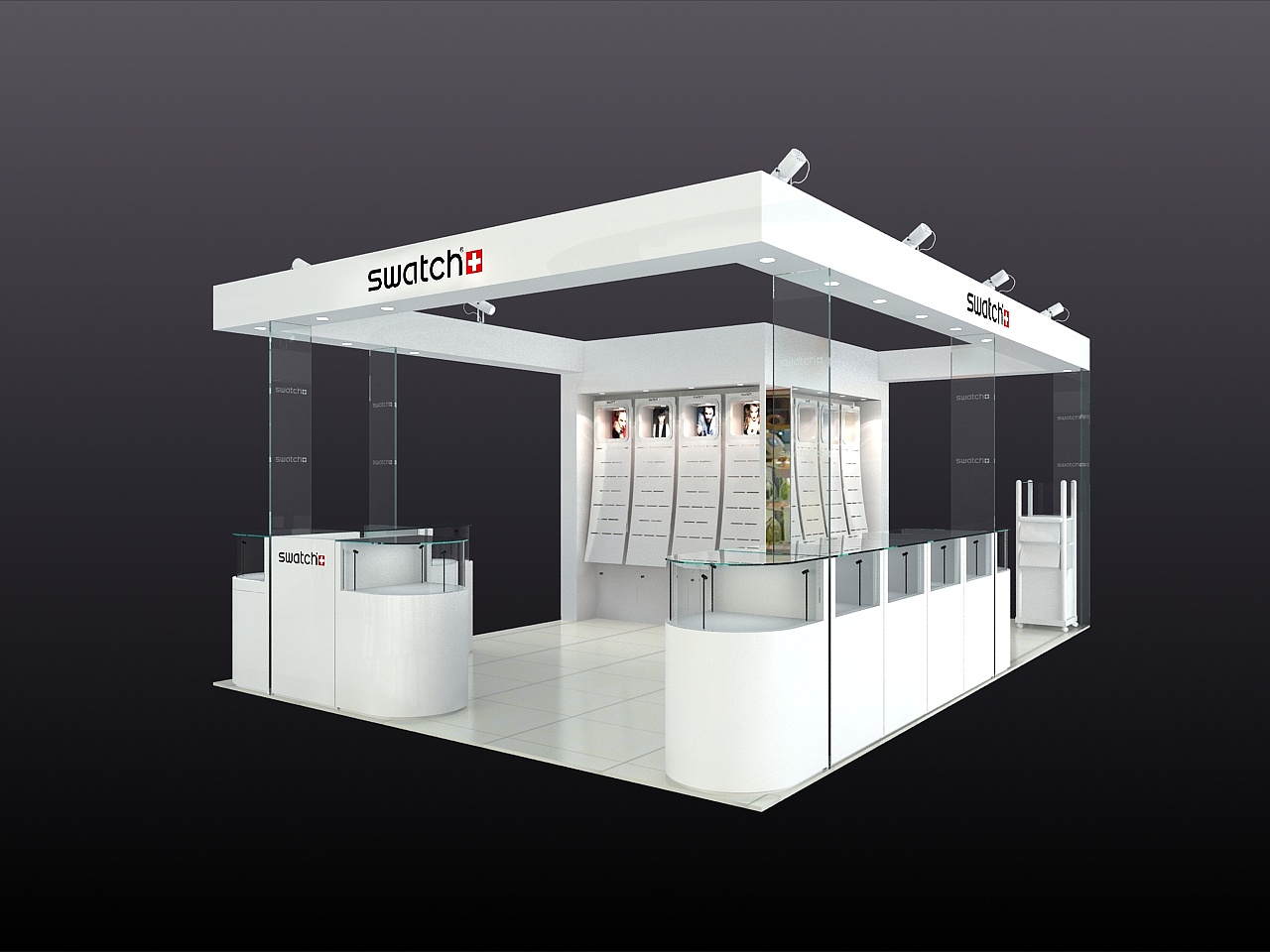
For a quote, send a dimensioned floor plan, the categories you sell and tray count for each, security requirements, finish direction, lighting temperature, quantity, destination city and target opening date. Units ship crated from our factory in Huizhou, China, normally by sea freight; check crate sizes against your lift and doorways first. Lead time is confirmed after drawings are approved — see our lead time page. Stores combining categories often quote alongside watch display fixtures.
FAQ

Frequently asked questions

Most frequent questions and answers for this jewelry page, based on the kind of project details buyers usually need before design, quotation, production, shipment, installation, and after-sales support.

What information helps start a jewelry showcase project?

The best starting package includes store dimensions, product categories, need for trays or towers, lighting expectations, finish references, and delivery location.

Can the showcases include concealed drawers and lighting?

Yes. Jewelry projects often combine illuminated glass display with hidden staff storage, tray systems, and controlled access points.

Can you match the showcase style to our boutique brand?

Yes. Material direction, metal finish, lighting temperature, and cabinet detailing can all be adjusted to fit the intended retail identity.

Is this suitable for one counter or a full store package?

Both are possible. The same system can begin as one showcase or expand into a coordinated jewelry fixture family.

How much does a jewelry display case cost?

There is no list price, because the same outline can be built several ways. The drivers are glass specification and whether the visible panels are low-iron, lighting quality and how many accent fittings are used, hardware grade on locks and runners, whether the carcass is sprayed lacquer or laminate, tray count and lining, and how the unit is crated for export. Quantity matters too: cases sharing one module cost much less per unit than unrelated one-off designs.

How long does a custom jewelry showcase take to make?

The schedule runs through design and shop drawings, your approval, production and quality check, then crating and freight. The approval step is the one buyers control and usually decides whether a project runs to plan. Lead time is confirmed after drawings are approved; our lead time page explains how the schedule is built.

How many display cases does a small jewelry store need?

Count selling positions and trays rather than square metres. Decide how many trays each category needs at the density you want, add the stock that returns to the safe overnight, and the counter length follows. Most small boutiques end up with a short counter run, a wall vitrine package, one hero position and a cash wrap. Building on one repeated module lets you add a matching unit later.

What colour temperature is best for jewelry display lighting?

It depends on your metal mix. Warmer light flatters yellow and rose gold and warm interiors; cooler, more neutral light makes diamonds, platinum and white gold read brighter. Stores selling both usually settle on one mid-range temperature rather than mixing, because two temperatures in adjacent cases reads as a fault. Colour rendering matters as much as temperature.

Can a jewelry display case have a motorized lift?

Yes. A motorized jewelry display case uses a low-voltage electric actuator to raise a glass hood or display platform out of the counter and lower it back into a locked carcass. Elite Fixtures builds motorized lift showcases for jewelry stores and walk-in closet islands, run by remote or touch switch, with the lift, LED lighting and lock drawn as one system at shop-drawing stage.

Are jewelry display cases secure enough to store stock overnight?

No display case is a safe and we make no burglary-resistance claims. What a well-specified case does is control access during trading: fixed glazing to the customer, lockable access to staff, a considered keying plan and lockable drawers. We can specify laminated glass, reinforced bases and better locks, and design counters so complete trays lift out into a safe at closing. Insurer requirements vary by policy; send the written requirement and we build to it.

Jewelry in Toronto and the GTA

Most of our jewelry ship from the factory to brands across North America, but our Toronto team also delivers and installs locally. Crews work out of the Markham office and cover Toronto, Markham, Scarborough, Mississauga, Vaughan, and Richmond Hill.

Local projects can be handled as fixtures only, or as fixtures plus the millwork, site work, and signage around them. On-site work carries $2,000,000 commercial general liability insurance and wsib coverage in good standing.

Request a GTA quote

Next step

Send the following information so the category scope can be reviewed more accurately.

  • Product type and size
  • Need for lighting or tray display
  • Security requirements
  • Preferred finish direction
  • Project quantity and delivery city
Contact our team

Need a Quote?

Share your store concept, category, and timeline

Reach our Toronto office for project coordination and use the factory-backed production workflow for custom fixtures, display systems, millwork, and rollout-ready fit-out support.