The fixture families a beauty supply store needs
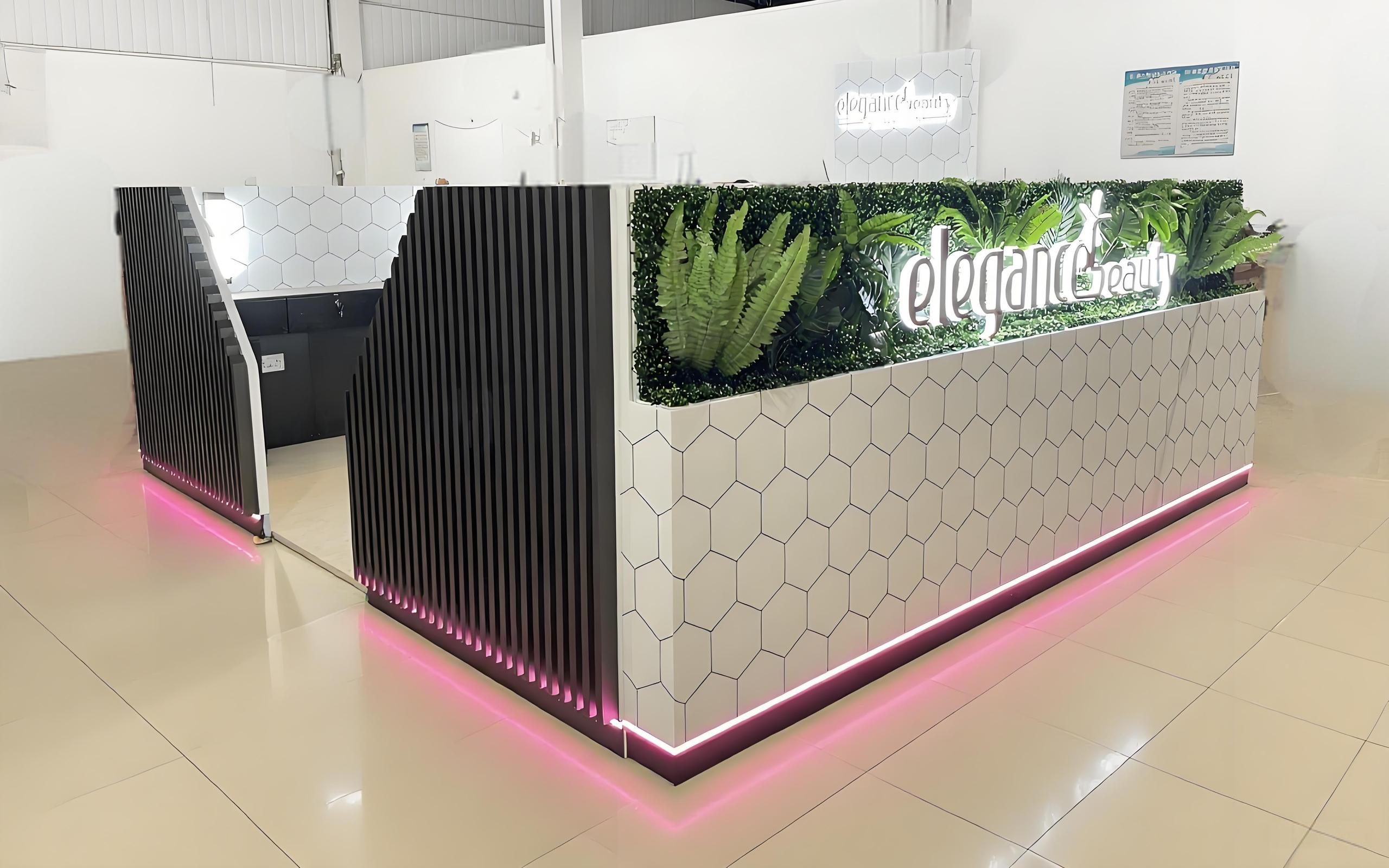
Most beauty floors combine perimeter wall bays, centre gondolas, a wig or hair wall, tester positions, a locked showcase near the till, a cash and wrap counter, and often a service station. The mix shifts with the business: a hair-led store gives most of its wall to packaged hair and wigs, a cosmetics-led store needs far more tester surface.
Wall bays are the unit everything follows. One bay width and one shelf pitch across the store means a shelf from any bay fits any other, which makes later resets cheap. The beauty tester wall display system uses that module, and the store fixtures range applies the same logic to gondolas.
- Perimeter wall bays on a single bay width and shelf pitch
- Centre gondolas kept low enough to see across the floor
- Wig or hair wall sized to unit count rather than to wall length
- Tester positions, locked showcase, cash and wrap, service station if offered
Wig and hair display: heads, hooks and packaged goods
Wig display is three problems needing three fixtures. Styled wigs on mannequin heads need a bracket deep enough for the head to sit stable and enough vertical pitch that hair hangs clear of the shelf below; crowding that pitch is the most common mistake on a wig wall. Boxed hair is a shelving and facing problem, and loose bundles hang from hooks on a rail or slotted upright.
Plan the wall as vertical strips by texture or length so a customer scans one strip instead of the whole wall, and leave a sign position on every strip. Customers pick wigs up, so a lipped shelf or a head post keeps units in place, and a mirror within a step or two is worth more than another bay of stock.
Where testers belong in the plan, and what spills cost
Tester placement is a layout decision before it is a fixture decision. Testers stop customers, so they belong where a stopped customer does not block the main aisle. Self-serve wants open access, a mirror at each position and a bin within arm's reach; assisted trial wants a working position for staff and task light on the customer's face rather than the product.
Spills are the running cost. Foundation, oil and fragrance mark porous surfaces quickly, so tester positions need a non-porous top or lift-out trays that go to a sink whole. Plan the floor too, since a tester island on a light finish shows its footprint within a season. Fragrance trial has its own needs; our perfume showcase approach transfers directly.
High-density shelving: depth, pitch and facings
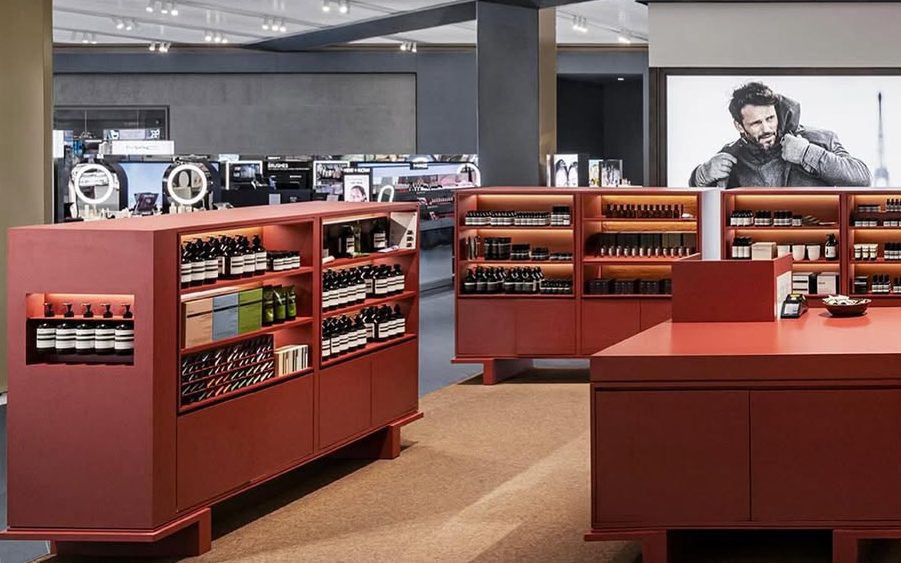
Shelf depth is the decision that matters most. A deep shelf holds more units but buries the back rows, which then never sell and never get counted. For small cosmetics a shallow shelf with more tiers usually beats a deep shelf with fewer, and dividers or trays hold facings straight without hourly resetting.
Categories want different fittings on the same wall: risers or tiered trays for polish and small jars, pegs for lashes and accessories, plain lipped shelves for bottles. One bay type accepting shelves, pegs and trays on the same fixing pattern lets a store change its mix without changing fixtures. A slotted standard adjusts more finely than pin-and-hole and takes heavier brackets, which suits stores that reset often.
Security for small, high-value goods
Beauty stores carry a lot of value in pocket-sized items, so the decision is item by item: what stays open because touching it sells it, and what goes behind glass. Premium haircare, appliances and lashes are the usual candidates, and a glass unit near the till keeps them visible while keeping them served. The construction used on our display cases carries over well.
Sightlines do more than locks. Keep centre gondolas low enough for a staff member at the till to see across the floor, avoid tall fixtures that create blind corners near the entrance, and give back stock and customer property separate lockable storage, planned into the cash and wrap rather than added later.
Lighting a beauty floor so shades read correctly
Colour is the product, so the light is part of the product. Ceiling light, shelf light, mirror light and the light at the cash and wrap should all render colour the same way. Mixing a warm ceiling with cool shelf strips produces returns from customers who chose a shade under one light and saw it under another.
Specify a high colour rendering source everywhere a shade decision is made, and keep colour temperature consistent across those zones rather than defaulting to whatever the building already has. Diffuse any strip a customer can look into, recess fixtures so the diode is never visible, and check how much daylight reaches the window bays.
Packing a full package, freight and comparing quotes
A store package ships as a mixed load. Wall panels and gondola components travel flat, counters and showcases travel as pre-assembled modules, and acrylic, mirror and glass are crated separately because they are what transit damages. Everything is numbered to the floor plan so an installer can work zone by zone. Sea freight from our Huizhou factory is the normal route.
For a quote, send the floor plan with dimensions and ceiling height, photographs, your category split with rough SKU counts, wig and tester counts, and whether any testers or mirrors are powered. When comparing suppliers, check each quote covers the same fixture list, ask what the shelf and bracket system is, and ask whether lighting, crating and freight sit inside the price. Lead time is confirmed after drawings are approved; see the lead time guide.
- Floor plan with dimensions, ceiling height and column positions
- Category split with rough SKU counts, plus wig and tester counts
- Which items must be locked and which stay open
- Whether the quote includes lighting, crating and freight