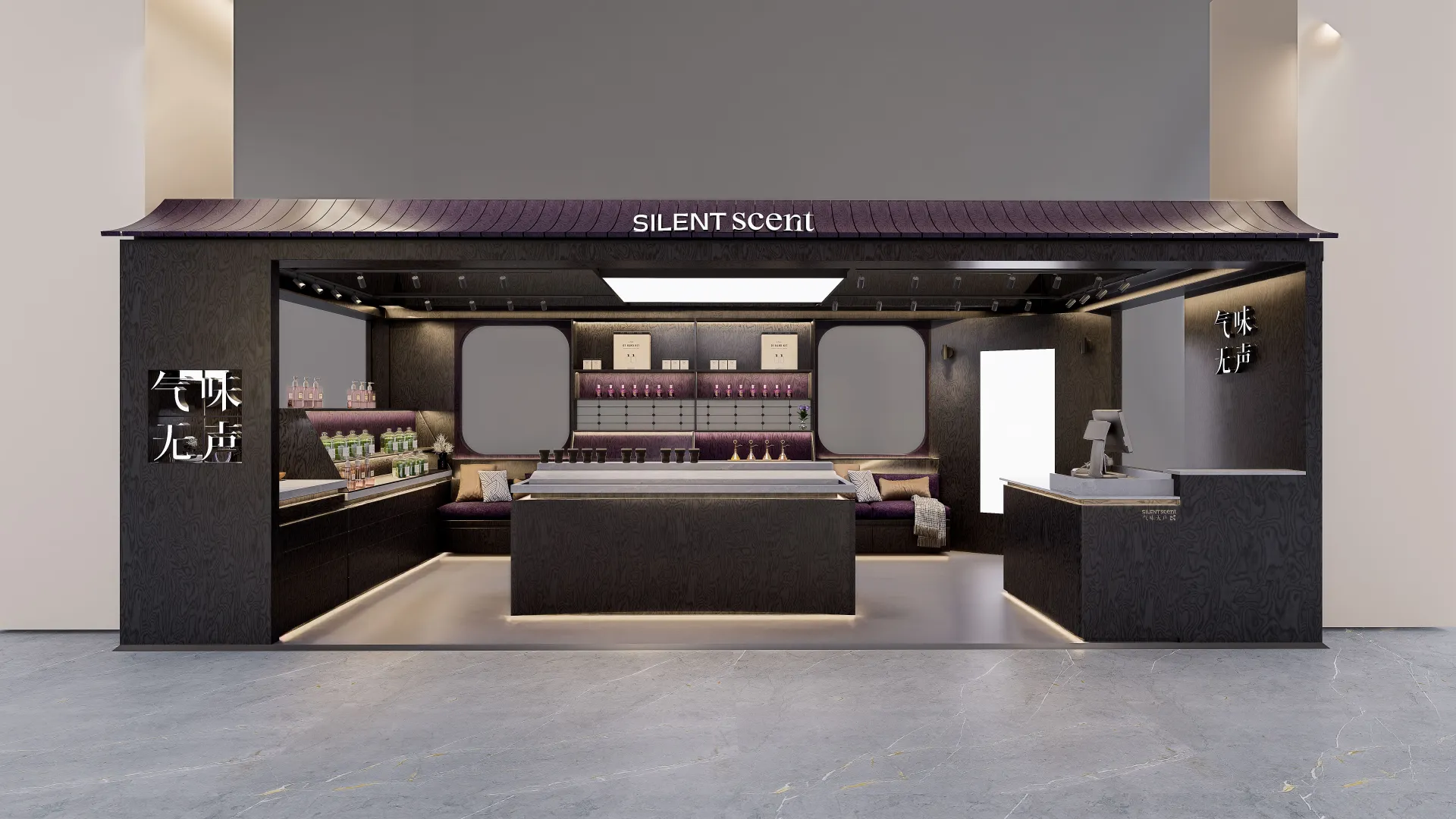
The fixture types in a fragrance package
A perfume display package breaks into five fixture types. Wall units carry the depth of the range and the brand imagery. Tester bars are where customers interact with product. Islands hold promotional and gifting assortments. The cashwrap handles transaction and gift wrapping. Feature plinths and lit niches carry launches.
They need different surfaces, which is why they are specified separately. A tester position gets sprayed daily and needs a material that tolerates alcohol; a wall unit holding boxed stock never gets sprayed and can take a finer finish. One material everywhere either overspends on the wall or underspecifies the tester bar. The range is in our perfume showcase category.
- Wall units: range depth and brand imagery
- Tester bars: the interaction point
- Islands: promotional and gifting assortments
- Plinths and lit niches: launches and hero products
Boutique, concession and duty-free formats
A standalone boutique controls its own layout, can build a browse path from entry through hero launches to the wider range, and can afford quieter zones because the customer came to shop fragrance.
A concession is constrained by the host's fixture standards and height limits, needs a stronger vertical brand element to be seen across a busy floor, and has less storage. Duty-free is the most demanding: high traffic, short dwell time, customers with luggage and a gifting-heavy assortment, so aisles are wider and durability matters more.
Brand-block merchandising and how it shapes the fixture
Fragrance is merchandised in brand blocks more than most categories. Customers navigate by house first and product second, so the fixture has to make each brand read as its own territory while the run still looks like one store.
That has a construction consequence: brand elements must be replaceable from the start. A rebate for a printed panel, a clip-in frame or a lightbox with an accessible face all work. A graphic bonded in place dates the whole run when a campaign ends. It also affects module sizing, since blocks renegotiated seasonally should change by whole bays.
- Panel replacement method chosen before the carcass is drawn
- Module sized so blocks change by whole bays
- Tool-free panel swaps where store staff do the change
- Consistent trim and lighting so the run reads as one store
Tester bars and spill-tolerant surfaces
The tester bar decides whether a set of perfume showcases ages well. Perfume is alcohol. Overspray lands on the shelf, runs down the front and sits there until wiped, and finishes that are durable elsewhere will cloud, soften or lift in a tester zone.
Put tolerant materials where spray happens and fine finishes where it does not. Glass with polished edges and removable acrylic trays handle the tester line; laminate wipes well nearby; lacquer and veneer belong on vertical brand panels. Design for the spill too: a raised lip contains a knocked bottle instead of letting it run into a lighting channel.
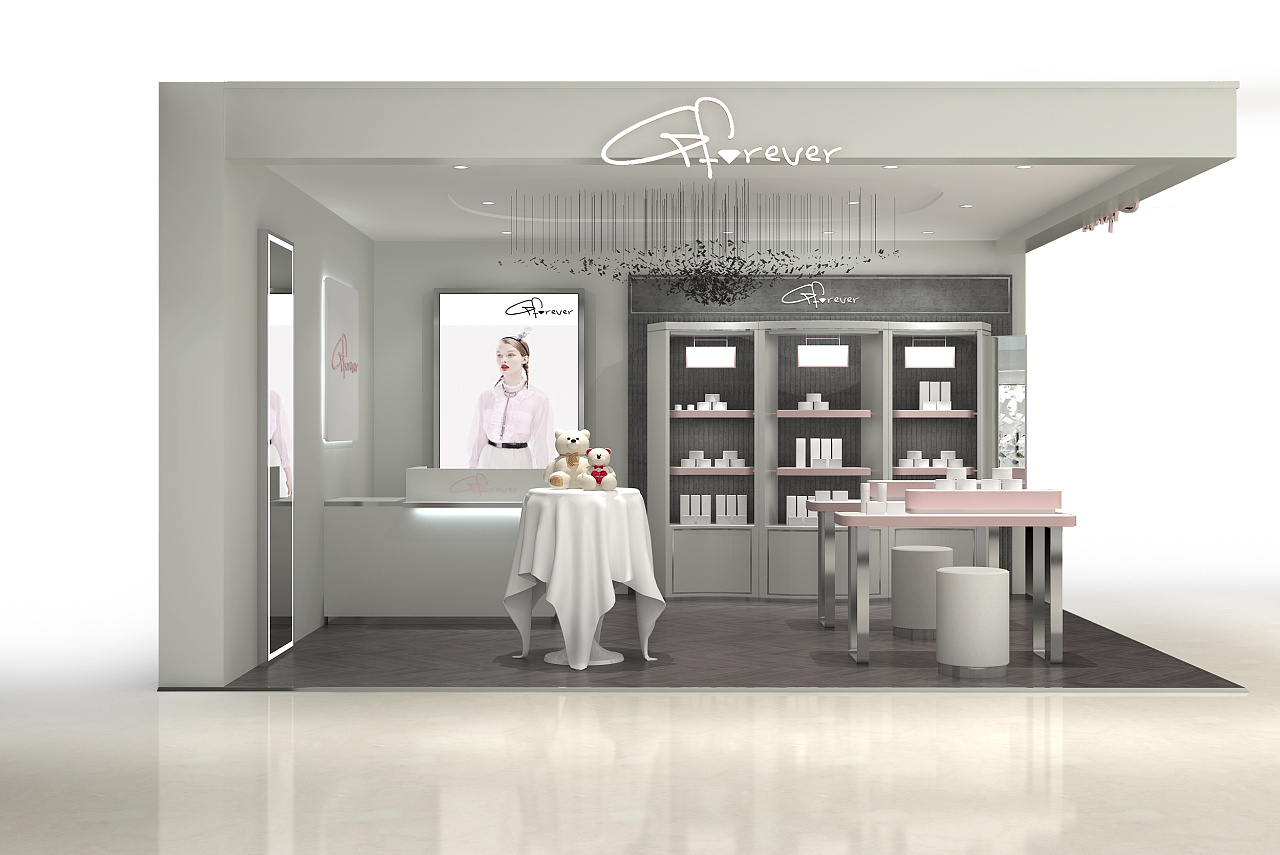
Glass shelf thickness, edge finish and hardware
Glass does most of the work here, and its specification is where quotes differ most. Shelf thickness follows the span between supports and the weight of bottles carried, not preference. A thin shelf over a long span bows under a full row of heavy flacons, and the bow does not come back out.
Edge finish is a safety and an appearance item. A polished or bevelled edge makes a shelf look finished; a ground edge reads unfinished at arm's length. Pin supports at a fine pitch let shelves move as bottle heights change, while bonded shelves lock the layout. Glazed construction detail is on our luxury LED glass display case page.
- Shelf thickness matched to span and bottle weight
- Polished or bevelled edges on customer-facing shelves
- Adjustable pin supports where bottle heights change by launch
- Hinge and lock grade stated in the quote
Backlit presentation and boxed stock storage
Bottles are transparent and faceted, which makes them rewarding to light and easy to light badly. Light through a bottle gives the liquid depth; light bounced off the front shows a reflection of the fitting. Decide which fixtures get backlighting: hero walls, launch niches and premium blocks earn it, a boxed-stock cabinet generally does not. Keep one colour temperature and match adjacent beauty supply store fixtures.
Box storage is the operational half. Size drawers to the cartons, because fragrance box heights vary widely and a single drawer depth wastes volume. Lockable storage is worth specifying in a high-shrinkage category, but keep one unlocked drawer for bags, blotters and cleaning supplies, and plan the replenishment route so the display does not empty faster than staff can refill it.
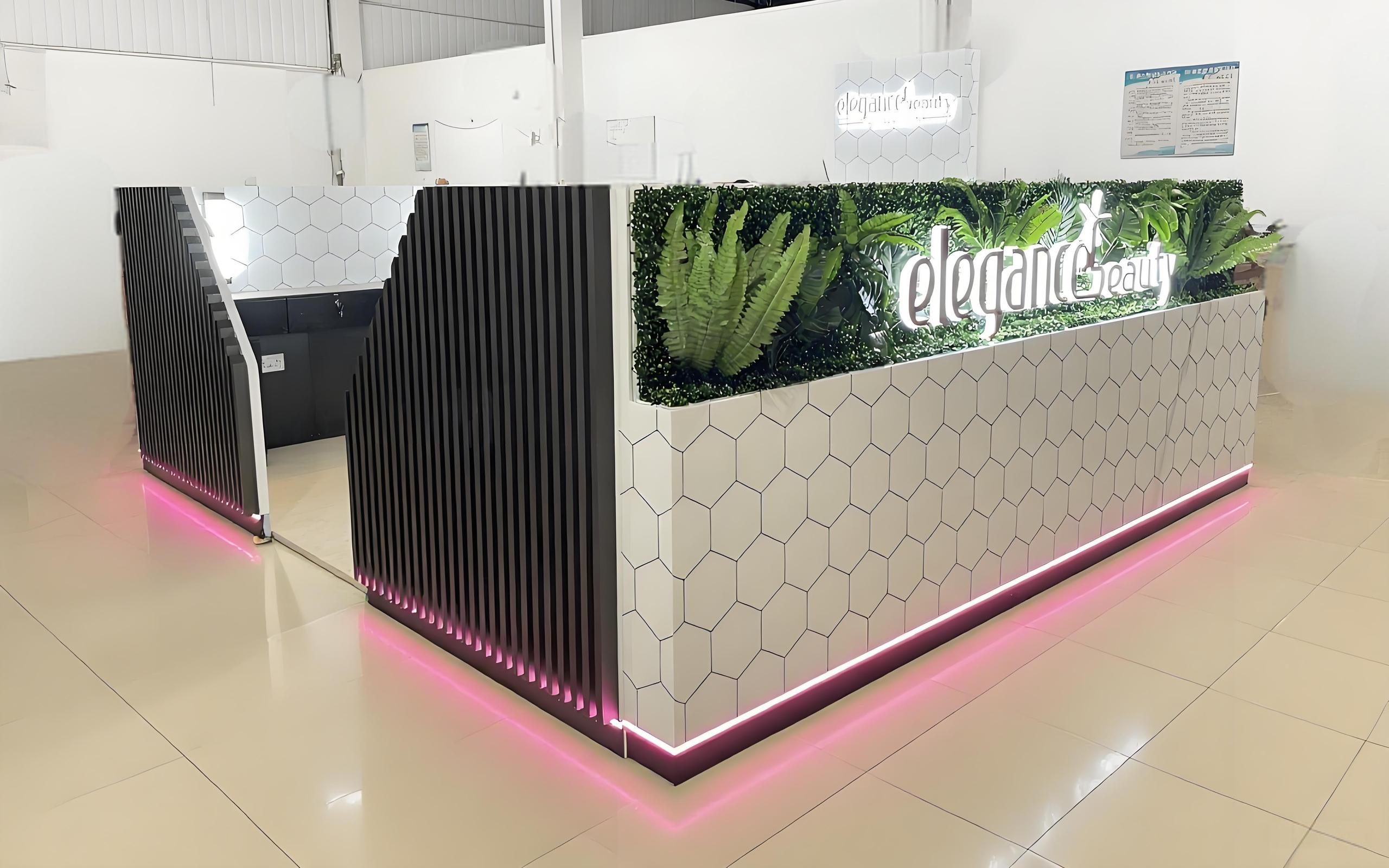
Shipping glass-heavy packages and comparing quotes
Perfume packages ship mostly assembled, because glass, lighting and hardware are fitted and tested at the factory rather than on a sales floor. Units are individually crated, loose glass shelves travel in dedicated crates with interleaving, and acrylic trays are wrapped separately. We build in Huizhou, China, and most North American orders move by sea freight.
Ask for crates labelled and sequenced to the installation order, since uncrating out of sequence causes most site damage. Power is connected by a local licensed electrician. Confirm exclusions too, because installation labour and local delivery are often assumed. Lead time is confirmed after drawings are approved on our lead time page, and a kiosk build is shown in our SilentScent fragrance kiosk project.
- Glass thickness, edge treatment and support type
- Hinge, lock and drawer runner grade
- Lighting, drivers and transformers in or out of scope
- Brand panel replacement method and who swaps panels
- Export crating, shipping term and site scope exclusions