
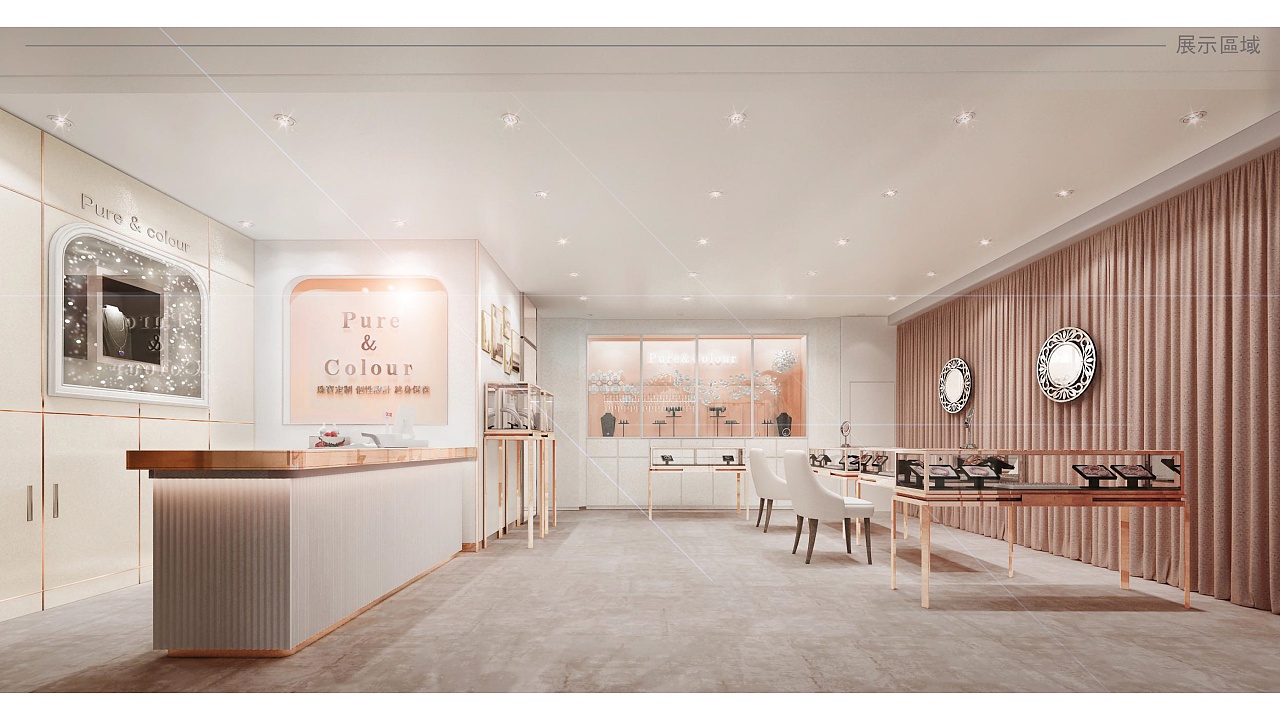
Choosing the glass specification
Glass is the first decision and it changes both the look and the price. Tempered glass between 5 mm and 10 mm covers almost every display case. Shelves at 5 mm or 6 mm suit light goods over short spans; 8 mm is the usual choice for a glass top customers lean on; 10 mm appears on long unsupported spans and tall vertical panels where rigidity matters more than weight.
Standard float glass has a faint green cast in the edge, and on a 10 mm edge it is easy to see against white product. Low-iron glass removes it. It costs more, but it is the single upgrade that most changes how product reads, because white metals and pale stones stop picking up a tint. If budget stretches to one upgrade, spend it on low-iron for the front panels.
Edges and joins matter as much as thickness. Flat-polished edges are normal on shelves; mitred and glued corners give the near-frameless look but need careful handling in transit. Tempered glass cannot be cut or drilled after tempering, so every hole and cut-out is settled at drawing approval. More configurations are in our display cases category.
- 5-6 mm tempered: shelves, short spans, light product
- 8 mm tempered: glass tops, doors, general use
- 10 mm tempered: long spans, tall panels, heavier loads
- Low-iron: removes the green edge cast on premium cases
Cabinet construction under the glass
The base cabinet does the structural work. Most cases use an 18 mm MDF carcass with a painted, laminated or veneered face, on a plinth or levelling feet. MDF is used instead of solid timber because it stays flat, takes a spray finish without grain telegraphing through, and behaves predictably moving between a humid factory and a dry, heated store.
Where a cabinet carries a heavy glass top or a long span we add internal ribs and thicken the top substrate, because a top that deflects even 2 mm under load shows as a wavy reflection along the glass. Corners are dowelled and glued rather than screwed alone, and backs are captured in a rebate so the cabinet keeps its squareness through shipping.
Metal trim is specified separately. Brushed or mirror stainless is most common, with titanium-coated stainless in gold, champagne, rose or black for premium work. Mirror finishes look excellent in photographs and show every fingerprint in real life, so on a case customers touch, brushed wears better.
LED lighting and colour temperature
There are two lighting approaches and good cases use both. LED strip in a recessed aluminium channel gives even, shadowless fill and hides the source. Spot or mini-projector fittings give a directional beam that creates sparkle on stones, metal and glass. Fill alone looks flat; spots alone look patchy. A common split is strip fill along each shelf plus two or three small spots on the hero position.
Colour temperature runs from about 2700K to 4000K. 2700K to 3000K is warm and flatters gold, wood and cream interiors. 3500K is neutral. 4000K reads crisp and suits platinum, white gold and tech-forward concepts. Pick one temperature for the whole store, because a 3000K case beside a 4000K case makes both look wrong. Ask about colour rendering too: how close colours look to daylight is the entire point of lighting premium product.
Plan where the driver lives. A driver sealed inside a cabinet with no airflow runs hot and fails early, so we locate it in a ventilated section of the base with access for service.
Locking, access, and day-to-day security
Sliding glass doors with a ratchet or plunger lock are standard on counter cases: cheap, low-profile, adequate for general retail. Hinged doors with a cam lock close more firmly and seal better against dust. Tubular locks resist casual picking far better and are the sensible upgrade on high-value stock.
Think about who opens what. Most stores want customer-facing glazing locked and a separate staff-side access point open during trading. Keying can be alike across a group of cases or separate per case, depending on how many staff carry keys. Settle it at drawing stage, because rekeying after delivery is fiddly.
We can specify laminated glass where more physical resistance is wanted, and design in concealed drawers below the display. What we will not do is make a security claim we cannot stand behind: no display case is a safe, and high-value overnight stock belongs in one. For related high-security configurations see our museum artifact display showcase.
Finishes, cleaning, and maintenance
Sprayed MDF in satin lacquer is the premium standard: a seamless, jointless surface with no visible grain, matched to almost any colour reference. Satin holds up better than high gloss, which shows swirl marks under spot lighting. Veneer suits timber-led concepts but moves with humidity and darkens under UV over years. Laminate is the most durable per dollar and the least luxurious in hand, so it often goes inside a case whose front is sprayed.
Clean glass with a microfibre cloth and cleaner sprayed onto the cloth, not the case, so liquid does not run into the LED channel or door track. Keep ammonia-based cleaners away from lacquered cabinets and suede linings; they will dull one and stain the other.
Vacuum door tracks weekly, because grit is what wears a sliding door until it drags. Soft-close hinges and runners can be adjusted when a door starts closing hard. Recheck levelling feet a few weeks after install. Keep spare LED strip and a driver from the original order, since matching an LED batch two years later is unreliable. Common questions of this kind are on our FAQ page.
Shipping, installation, and quoting
Glass display cases ship fully assembled wherever size allows, because glazing, lighting and alignment are more reliably done in the factory than on a store floor. Each case is foam-wrapped, corner-protected and crated in a wooden export crate built to its dimensions, with loose glass in dedicated glass crates with interleaving. Oversized runs ship as sections with a defined site join. We ship from Huizhou, China, normally by sea freight; see our factory page.
On site the work is uncrating, positioning, levelling, joining sections and final power connection by a local licensed electrician. Confirm before ordering that the crate fits the building's loading route, including the lift and any tight corner, since a case that cannot reach its floor is a slow and expensive problem.
For an accurate quote, send case dimensions or a sketch, what will be displayed, whether you need locking and concealed storage, finish and metal trim direction, lighting temperature, and quantity and destination city. Cases are usually quoted alongside counters such as our custom jewelry showcase counter. Lead time depends on finish complexity, glass specification and order size, and is confirmed after drawings are approved on our lead time page.