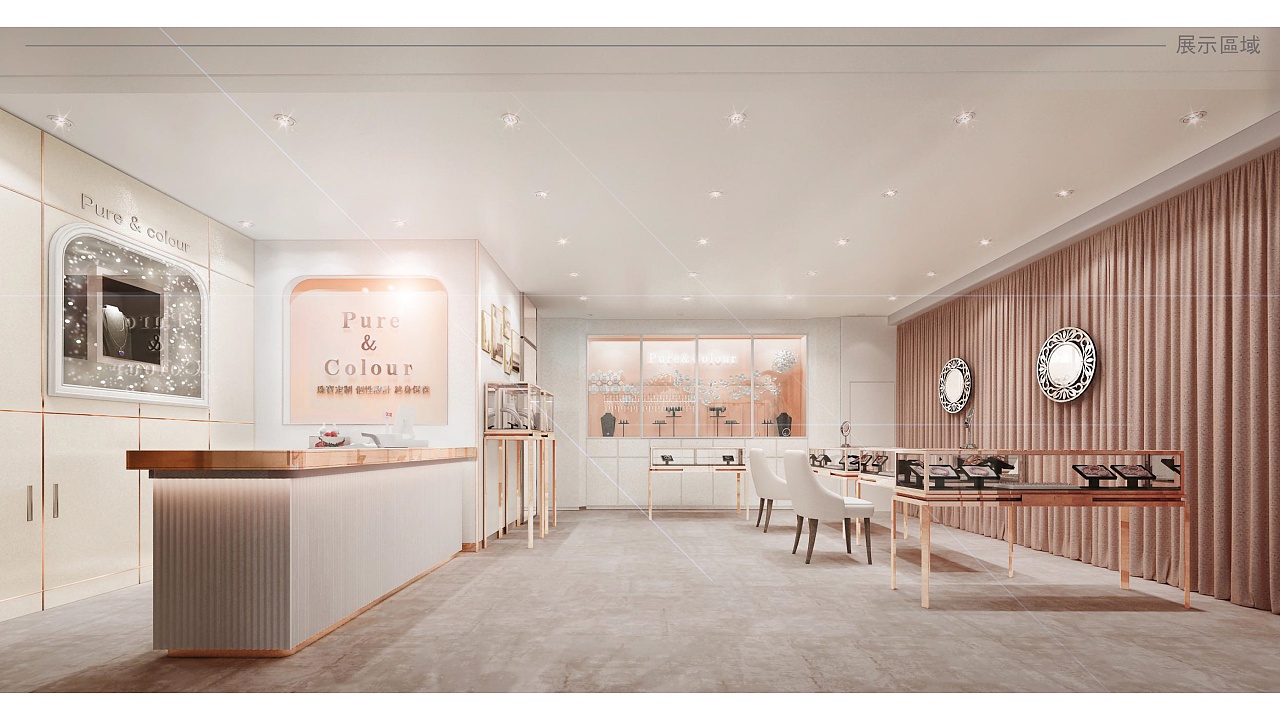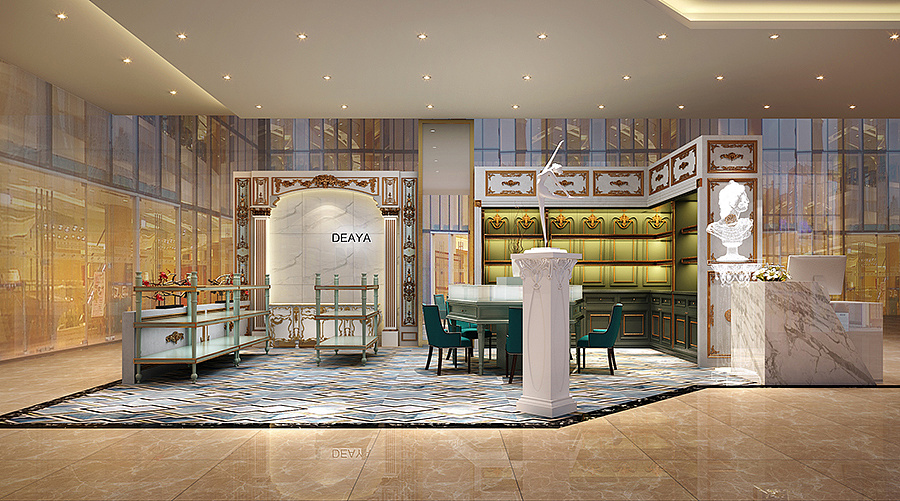
A fixture reads as luxury because of proportion, material transitions, and lighting control, not because of how much material is in it. Premium environments usually use fewer fixtures than standard stores, but each showcase, pedestal, and wall element carries more visual responsibility, and any weakness in a joint or a reflection is immediately visible.
Proportion comes before material
The single most reliable signal of a premium fixture is proportion. A case with the right glass-to-base ratio in a modest material will outperform a badly proportioned one in an expensive material every time. Before any finish is selected, fix the height of the base, the height of the glass, the depth of the top, and the thickness of the visible frame, and check them against a standing customer rather than against a drawing.
Space around the product does the same work. A luxury display deliberately holds fewer items than it could, because the empty area is what tells a customer the item is considered. Adding facings to a premium case is the fastest way to make it read as mid-market. This is where luxury fixture planning diverges most sharply from volume retail, where density usually wins.
- Set base height, glass height, top thickness, and frame width before choosing finishes
- Check every viewing height against a standing customer, not the plan
- Repeat the same base height and reveal across the whole fixture family
Materials that hold up as premium
Glass is the material that carries the most weight in a luxury case, and its specification is where quality is won or lost. Edge treatment, thickness, and clarity all show. Standard float glass has a green cast at the edge that becomes obvious on a thick panel, which is why low-iron glass is worth specifying where the edge is visible. Polished edges and well-executed joints between panels change how the whole case reads.
Metal is the second signal. Brushed and satin finishes conceal handling marks better than mirror finishes, which is why polished metal should be reserved for surfaces customers do not touch. Consistency of grain direction across adjacent metal components is a detail most buyers never specify and every customer notices when it is wrong. For exterior and storefront details, where the metal has to survive weather as well as look correct, our note on titanium retail fixtures compares the specialty options against stainless steel and aluminium.
Timber and stone read as premium when they are allowed to be themselves. Continuous grain across adjacent panels, a stone vein that runs through a mitre, and a solid edge rather than a wrapped one are all things a customer registers without analysing. They are also things that have to be requested in the specification, because they cost more in material yield and cutting time.
Lighting is the difference, and it has to be invisible
Lighting does more for perceived product value than any other variable, and the requirement is the same in every premium category: the effect should be visible and the source should not be. A visible LED strip, a hot spot on a glass shelf, or a reflection of the fixture in its own panel all undo the work the rest of the case is doing.
Three decisions control this. First, shielding: the light source sits behind a lip, a lens, or a diffuser so it cannot be seen from any customer viewing angle, including from below. Second, position: lighting from a single top position flattens a product and throws a hard shadow, while layered light from more than one direction gives the object form. Third, consistency: one colour temperature range across every fixture in the store, so the space does not read as patchy.
Serviceability is the constraint that is most often forgotten. A premium case will be in use for years, and a lighting element that cannot be replaced without dismantling the case will eventually be left dark. The luxury LED glass display case is planned around this: the lighting is integrated for appearance but reachable for maintenance.
- Shield the source so it is invisible from every customer angle, including low ones
- Layer the light rather than relying on a single top wash
- Hold one colour temperature range across the whole fixture package
- Confirm a lighting element can be replaced without dismantling the case
Detailing: where premium is actually decided
Material transitions matter more in luxury environments than anywhere else. A weak junction between glass, metal, and cabinetry is immediately visible at the distance a customer stands. That is why joinery precision, surface finishing, and hardware detailing become part of the customer experience rather than only a production concern.
Reveals and shadow gaps are the most useful tool here. A deliberate, consistent gap between two materials looks intentional and absorbs the small tolerance variation that always exists in manufacturing. Two materials pushed tight together look wrong the moment either one moves, and they will move with humidity and handling. Specify the reveal dimension and hold it everywhere.
Hardware is judged by touch. A door that closes with a soft, controlled action reads as expensive; the same door on cheap hinges reads as ordinary no matter what it is made of. Hinges, locks, slides, and pulls are among the least expensive ways to raise the perceived quality of a fixture, and among the most common places a budget is trimmed.
Fabrication capability decides how far this detailing can go. Tight tolerances in metalwork, clean welds, and consistent finishing are what allow a reveal to be held across a run of units, which is the point of our custom stainless steel fabrication work.
Balancing openness with protection
Luxury retail needs a different balance between access and security than volume retail does. Products have to feel reachable enough to support a conversation, but controlled enough for daily operation. This is one reason premium brands rely on custom display case systems rather than stock fixtures: the security has to be integrated rather than added.
Category matters here. Jewelry showcases and watch display counters usually need full enclosure with a controlled presentation ritual, where the item is removed and placed on a tray. Museum display environments need sealed cases with different priorities again: long dwell time, controlled light exposure, and access that is deliberately slow. A fragrance or beauty environment sits at the other end, where testing has to be easy and only the stock is secured.
Our note on how to design a quiet luxury fragrance kiosk works through that trade-off in a compact format, where every one of these decisions has to be made in a few square metres.
Keeping a premium fixture practical
The most successful luxury fixture programs create controlled elegance that still works on a Tuesday afternoon. They support the product narrative, keep visual breathing room, and remain practical for staff use, replenishment, and long-term maintenance.
If you are planning a premium display program, send the store dimensions, the product categories, your material direction, and your target opening date through the contact page. The display case category shows the systems these decisions are usually built from, and the lead time guide explains how long a premium package realistically takes from approval to installation.