Counter height, depth, and the selling position
Jewelry counters are sized around a transaction, not around storage. Standard counter height is 900 mm to 1000 mm, which suits a customer standing and a staff member on the other side. Seated selling, common for bridal and high-value consultation, drops the working surface to around 750 mm with stools both sides and a knee space cut into the cabinet. Make that decision early, because it changes the whole unit.
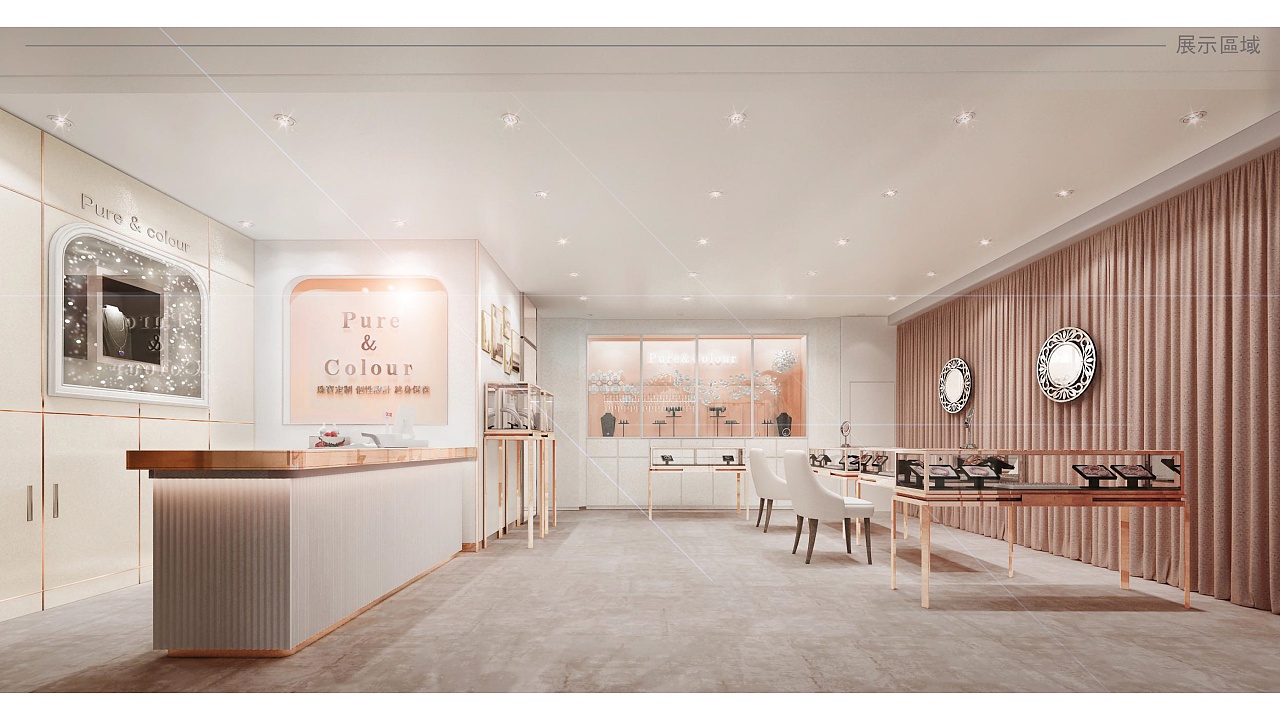
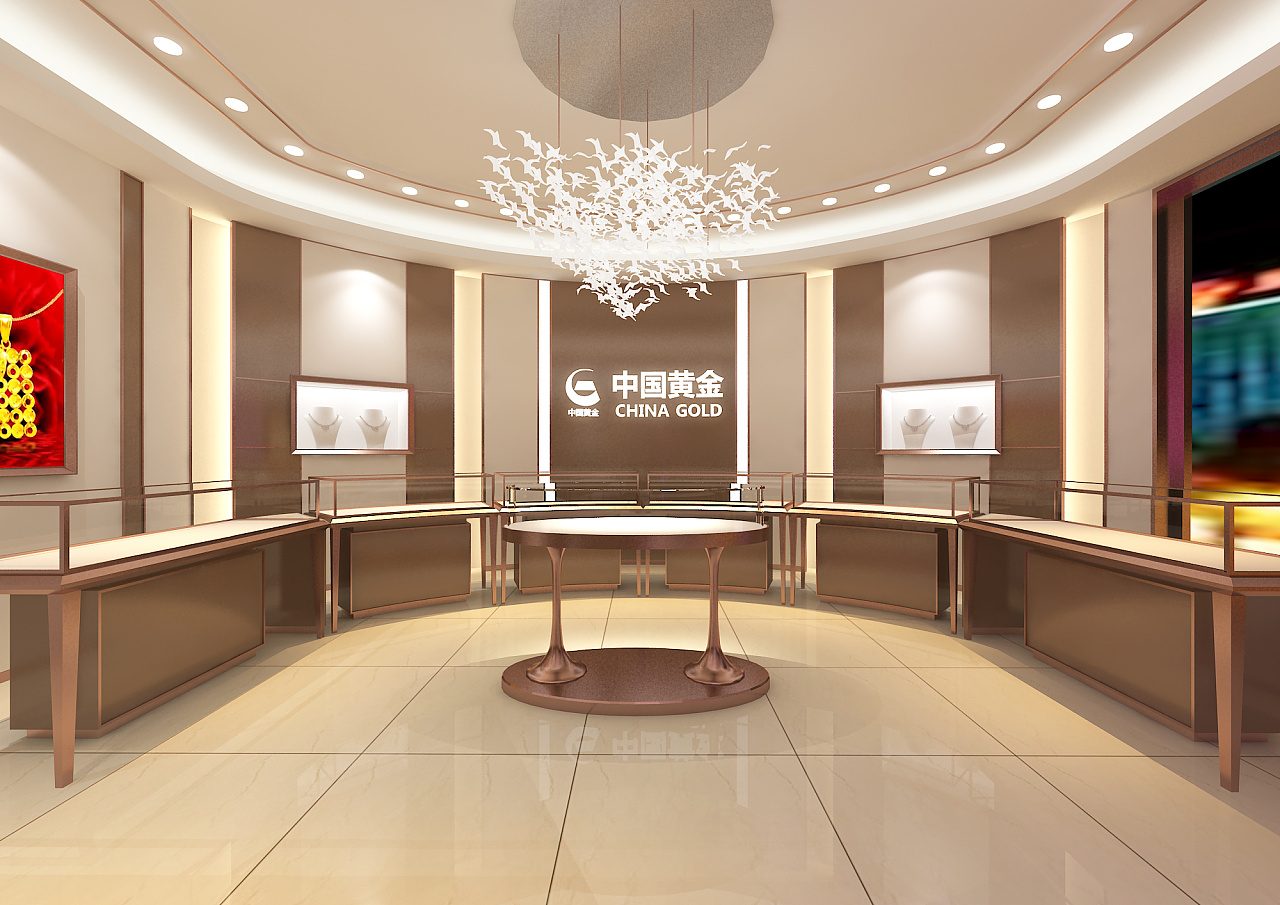
Depth is usually 500 mm to 600 mm. Shallower cramps the trays; deeper puts the back of the case beyond comfortable staff reach and pushes the customer's viewing angle onto the top of the product rather than its face. Plan the run as a shape, not a line: an L or U lets one person cover more display without walking. More formats sit in our jewelry fixtures category.
- Standing counter: 900-1000 mm high, 500-600 mm deep
- Seated consultation: around 750 mm high, stools both sides
- Allow 900-1100 mm clear staff aisle behind the run
- Glass top typically 8 mm tempered, low-iron on premium work
Tray layout and the inside of the case
The tray plan decides how the counter sells. Ring trays, pendant ramps, bangle bars and flat pads all want different depths, and a counter designed before the tray plan usually ends up with a dead zone at the back. Work out how many trays per bay, in what sizes, and whether they sit flat or on a riser, then size the case around that.
Stepped risers lift the back row so a standing customer sees the whole face of every piece instead of a row hidden behind the front. A 40 mm to 60 mm step is usually enough. Removable risers are more flexible for seasonal changes and easier to clean under than fixed ones.
Tray linings affect how metal reads. Light greys sit well under cool light for platinum and white gold; cream and taupe warm up yellow gold; black looks dramatic and shows every speck of dust. Trays are consumable, so order spares with the counters - matching a lining colour two years later is hit and miss.
Lighting a jewelry counter
Jewelry is the hardest category to light because it needs two contradictory things: even fill so nothing sits in shadow, and directional punch so stones and polished metal throw sparkle. Strip alone gives the first; aimed spots alone give the second plus hard shadows. The working answer is a recessed LED strip in an aluminium channel for base fill plus discreet spots aimed into the tray zone.
Colour temperature should follow the metal mix. 2700K to 3000K flatters yellow gold, rose gold and warm interiors. 3500K to 4000K makes diamonds and white gold look brighter and cleaner. Stores selling both usually settle around 3000K to 3500K rather than mixing temperatures between adjacent cases, which always looks like a fault.
Watch heat and glare. LED in a sealed case raises interior temperature, which is unkind to linings and uncomfortable when staff reach in, so drivers go in a ventilated base section. Diffusers matter too, so the customer sees lit product rather than a row of bright dots reflected in the glass. The same approach applies across a fixture family including our luxury LED glass display case.
Security, locking, and staff-side storage
Most jewelry counters lock from the staff side, with sliding or hinged doors facing staff and fixed glazing facing the customer. That geometry alone removes the easiest grab. Cam locks are standard; tubular locks are the sensible upgrade for high-value stock. Keying alike across a run is convenient, keying separately limits exposure, and the right answer depends on how many staff carry keys.
Under-counter storage is where the store actually operates. Soft-close drawers on full-extension runners let staff pull a tray right out without it tipping, which three-quarter-extension runners will not do. A lockable drawer bank for higher-value stock plus one open bank for daily consumables is a common split.
We will specify laminated glass, reinforced bases and better locks where you want them, and design a counter so overnight stock lifts out as complete trays into a safe. We do not claim any case is burglar resistant and we do not quote security ratings.
Finishes, trim, and how they age
Sprayed MDF in satin lacquer is the standard boutique finish: a clean, seamless face with no grain, matched closely to a brand colour. Satin outlasts high gloss, which shows swirl marks under spot lighting within months. Veneer suits warmer concepts but shifts in colour under UV, so a counter in a sunlit frontage drifts away from one at the back of the store over a few years.
Metal trim is usually brushed or mirror stainless, or titanium-coated stainless in gold, champagne, rose or black. On the customer-facing front edge, where sleeves and bag straps rub all day, brushed hides handling far better than mirror.
Two details decide how a counter looks after a year. A solid or heavily banded front edge survives trolley and bag impact where a thin band chips, and a recessed toe kick in a dark hard finish takes shoe scuffing instead of the cabinet face. Both are cheap to specify and awkward to add later. If your project also involves site-built cabinetry in Ontario, our custom millwork service in Toronto covers that side.
Shipping, installation, and what to send for a quote
Counters ship fully assembled when size allows, because glazing, lighting and alignment are more reliable at the factory than on a shop floor. Each unit is foam-wrapped, corner-protected and crated in a wooden export crate; long runs split into sections with a defined join and corner units ship separately. We build in Huizhou, China, with sea freight to North America as the normal route. Check the loading route, lift dimensions and tight corners before ordering.
Installation is uncrating, positioning, levelling on adjustable feet, joining sections, and power connection by a local licensed electrician. Level the first unit carefully and work off it; a run that starts out of level shows a visible step in the glass line by the fourth case. Recheck the feet a few weeks later, since a counter that settles out of level will make doors bind and drawers run unevenly.
For a quote, send the store plan or run dimensions, the jewelry categories you sell, tray count and type, whether you want lockable and soft-close storage, finish and trim direction, lighting temperature, and quantity and destination city. Counters are almost always quoted as a family with wall cabinets and a cash wrap, often alongside a luxury watch display counter. Lead time depends on finish, glass specification and order size and is confirmed after drawings are approved - see our lead time page. Full-store layouts run through our store design service.