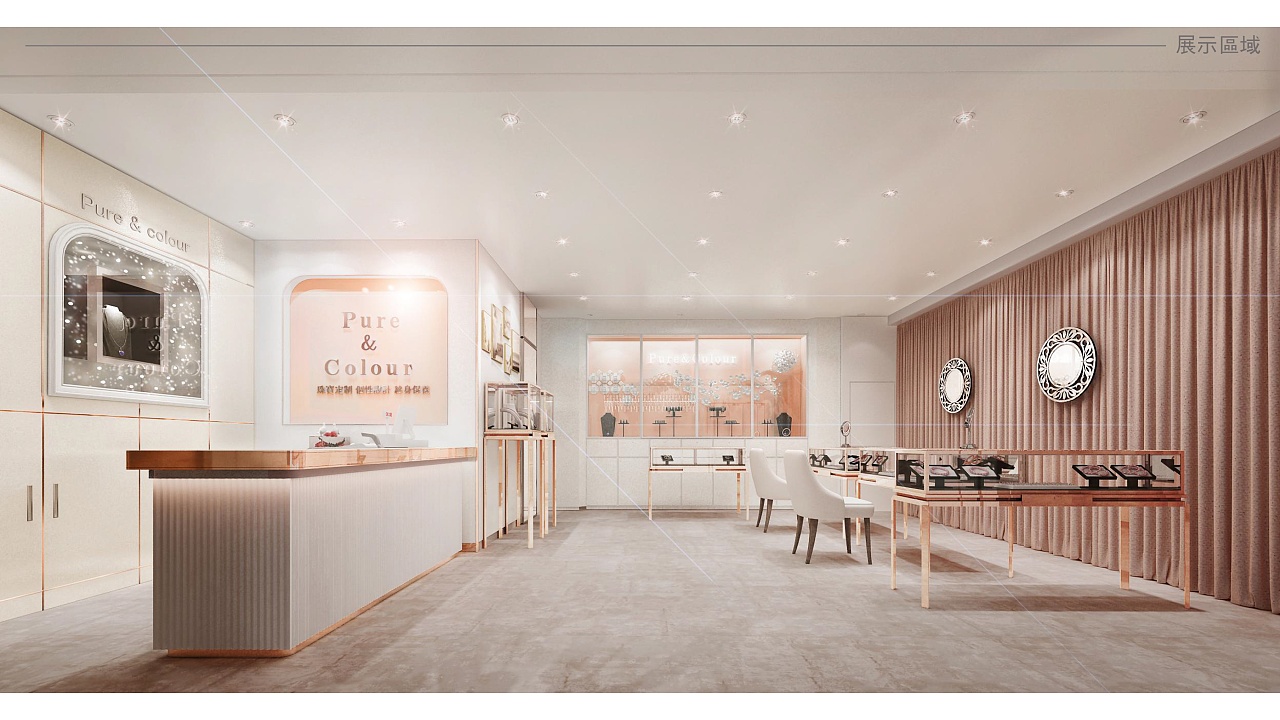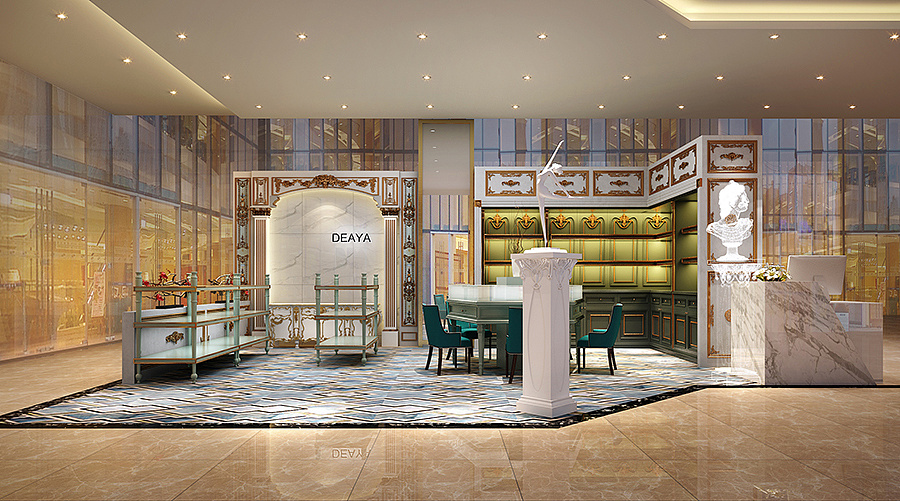
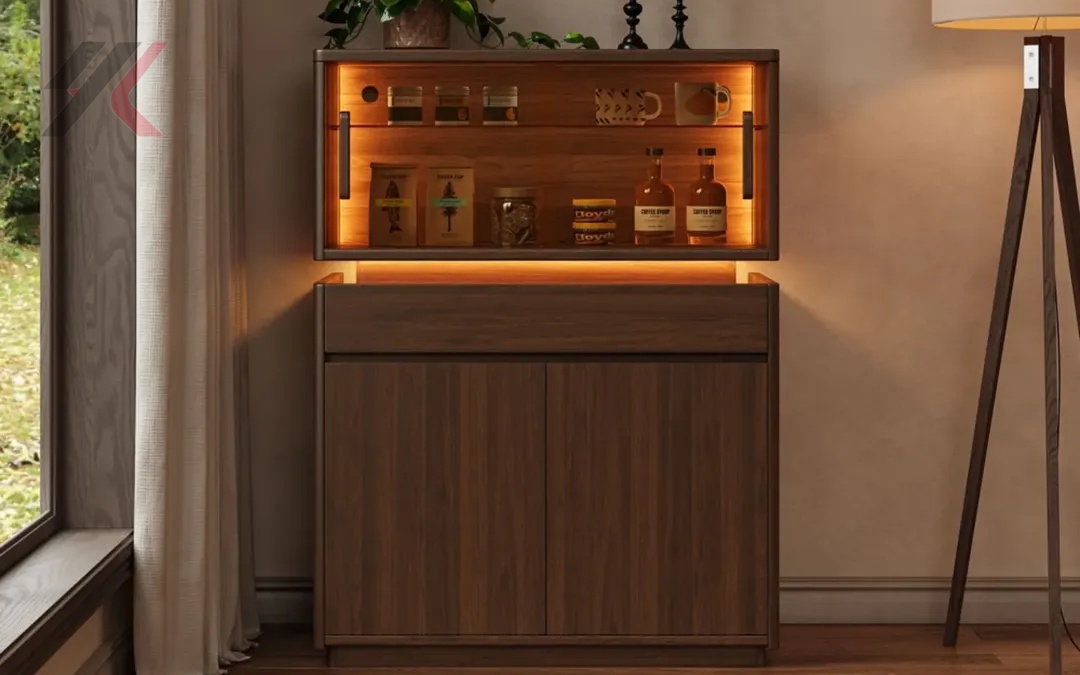
Millwork is any wood or panel component that is manufactured in a shop to a specific project's drawings and then delivered and installed on site. In construction, the word covers custom cabinetry, reception desks, wall panelling, trim, doors and frames, stair parts, and feature elements — anything produced on mill machinery rather than bought off a shelf.
The term comes from the mill: historically, the building where lumber was cut and shaped into finished profiles. Today most millwork is produced on panel saws, CNC routers, edgebanders and spray lines, and the material is as likely to be MDF, particleboard or plywood with a laminate or veneer face as it is solid wood. The defining feature is not the species. It is that the piece is fabricated to a drawing, off site, for one building.
What counts as millwork
A typical commercial millwork package on a retail, office or hospitality project includes:
- Casework — base cabinets, upper cabinets, wardrobes, storage units, teller and service counters
- Reception and transaction desks — usually the most detailed single item on the package
- Wall panelling and feature walls — slatted, fluted, flat-panel or upholstered-insert systems
- Trim and mouldings — base, casing, crown, chair rail, reveals, closure pieces
- Countertops — laminate, solid surface, or shop-fabricated substrates for stone set by others
- Shelving and display fixtures — including lit shelves and glazed display cases
- Doors, frames and jambs — where the spec calls for architectural wood doors
- Stair parts — handrails, treads, risers, guard infill
- Closure and filler work — scribes, soffits, bulkheads, the pieces that make everything else fit a real, out-of-square building
Millwork vs carpentry vs furniture
These three overlap in conversation and get separated in contracts.
| Where it is made | How it is defined | Who installs it | |
|---|---|---|---|
| Millwork | In a shop, before site work | Project drawings and a finish schedule | The millwork installer or a site carpenter |
| Carpentry | On site | Field measurement and building codes | The carpenter who cuts it |
| Furniture (FF&E) | Bought as a product | A catalogue number or a spec sheet | Delivered and placed, not built in |
Rough carpentry is framing, blocking and backing — structural work, usually covered off in Division 06 alongside millwork but tendered separately. Finish carpentry is site-cut trim and site installation. Furniture is loose: chairs, tables, freestanding shelving that a tenant can take when the lease ends. Millwork is fixed to the building and stays.
The practical test on a jobsite: if it was cut to a drawing in a shop and screwed to a wall, it is millwork. If it was cut to a tape measure in the corridor, it is carpentry. If it arrived on a pallet with a model number, it is furniture.
Standing millwork vs custom millwork
Standing millwork (sometimes called stock millwork) is made in standard runs to standard profiles: a base moulding, a door casing, a stock-size cabinet box. It is inventoried, cheap per foot, and fast. You specify it by profile number and species.
Custom millwork is made once, for one project, to dimensions and details that exist only in that project's drawings. A 14-foot curved reception desk with a lit quartz transaction ledge is custom. So is a wall of veneer panels sequenced so the grain runs continuously across eleven panels and two door leaves.
Most real projects mix the two. The economical approach is to use standing profiles wherever nobody will look closely, and spend the custom budget where the detail carries the brand — the entry, the counter, the feature wall. If you are pricing custom millwork for a Toronto commercial fit-out, this split is usually the first thing worth reviewing.
Where millwork appears in a commercial project
On a retail build, millwork is most of what the customer actually touches: the cash wrap, the display cases, the wall systems, the fitting-room benches and hooks. On an office fit-out it is the reception desk, the pantry casework, the boardroom credenza and the acoustic wall panelling. On a clinic it is the check-in counter, the nurse stations and the exam-room casework. On a café it is the front counter, the back bar and the menu surround.
Millwork also sits late in the schedule and early in the design. It is drawn and approved months before it ships, and it installs after flooring, ceilings and painting but before final electrical trim-out. That combination — decided early, installed last — is why millwork drives so many project delays. A drawing that sits unapproved for three weeks does not compress the fabrication time behind it.
Who supplies millwork
Three models are common:
1. A local shop. Close to site, easy to visit, straightforward for small packages and for anything that needs field measurement late. Capacity is the limit — a local shop running three other jobs cannot absorb a large rollout. 2. An overseas factory with local installation. The fabrication happens where machinery and labour are cheaper, the package is crated and shipped, and a local crew installs it. This is how most multi-store retail programs are built. 3. A general contractor who subcontracts it. The GC carries the risk and the coordination, and the millwork sub is one line in their tender.
Elite Fixtures runs the second model, with our own factory in Huizhou, Guangdong and a Canada office in Markham, Ontario. In the Greater Toronto Area — Toronto, Markham, Scarborough, Mississauga, Vaughan and Richmond Hill — we design, build and install, and our site work carries $2,000,000 commercial general liability insurance and WSIB coverage. Outside Canada we fabricate, crate and ship by sea, and the client's own contractor installs. You can see how the factory is set up if you want to understand what that means for tolerances and finish control.
How millwork is specified and priced
Millwork is specified in CSI Division 06 (Wood, Plastics, and Composites), typically under sections for interior architectural woodwork, plastic-laminate-clad casework and wood casework. A complete spec section states:
- The grade of work required, described in the architectural woodwork standards as Economy, Custom or Premium
- Core and substrate materials, and where each is allowed
- Face materials: laminate brand and colour, veneer species and cut, paint system and sheen
- Edge treatment, reveal dimensions, and tolerance for gaps and alignment
- Hardware: hinge type and cycle rating, slide load rating and extension, locks, pulls
- Fire ratings and any required testing for panelling and doors
- Submittal requirements — usually shop drawings plus physical samples
Price follows four things, in roughly this order: the amount of custom detail, the face material, the hardware grade, and the quantity. Two counters of identical size can differ by a wide margin because one is flat laminate with stock hinges and the other is sequence-matched veneer with soft-close hardware and a curved front. Quantity works the other way — the second identical store costs meaningfully less than the first because the drawings and the tooling are already done.
Lead time is not a number you can take from a catalogue. It is set by the fabrication queue, the finish system and the freight mode, and we confirm it only after drawings are approved. The lead-time page explains the stages.
What to send to get millwork quoted
A quotable package is short. Send:
- Floor plan and reflected ceiling plan, with dimensions
- Elevations or sketches of the millwork items, or reference photos if the design is not drawn yet
- A finish direction — laminate codes, veneer species, paint colours, or images
- Quantity: one location, or how many
- Site address and access notes: freight elevator, loading dock, after-hours restrictions
- Target opening date
What slows a quote down is missing quantities and missing finishes, not missing detail. A dimensioned plan with a clear finish direction is enough to price from. If you are comparing what falls inside a millwork package versus a casework package, the difference is worth reading before you tender: see casework vs millwork and the breakdown of commercial casework types. For scope that goes past fixtures into walls, flooring and services, our commercial renovation page covers how the two packages are bundled.