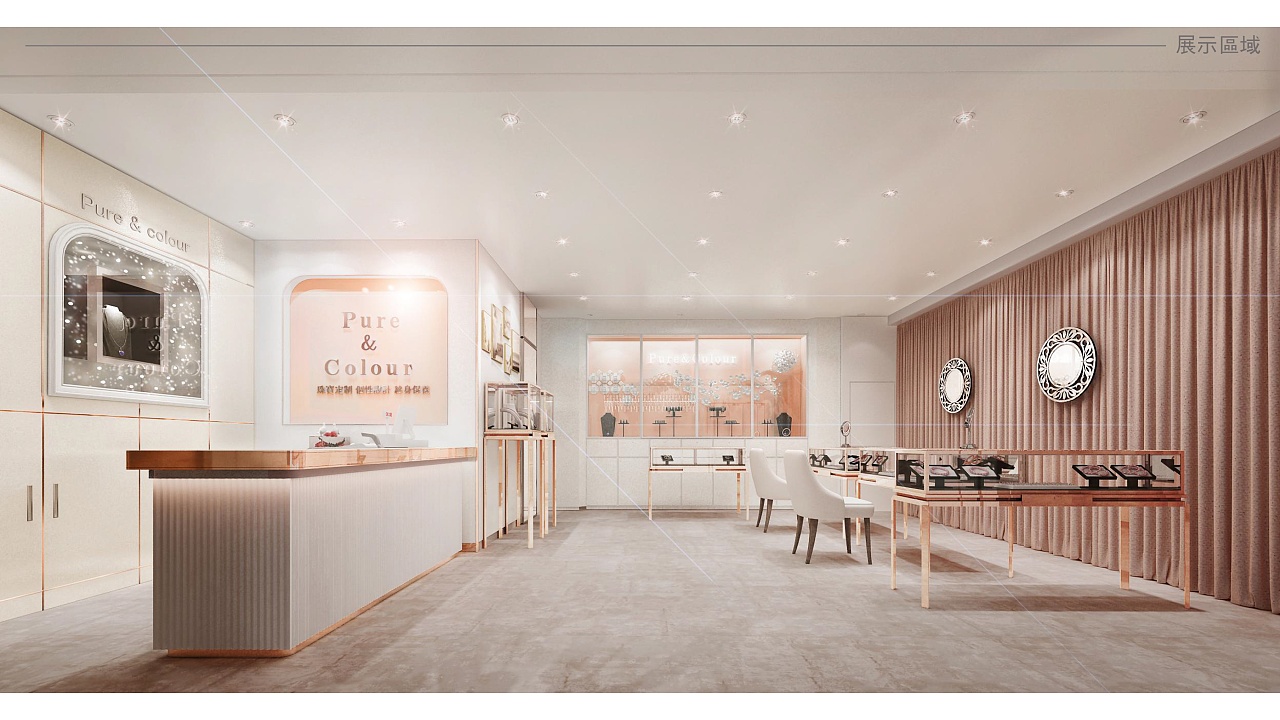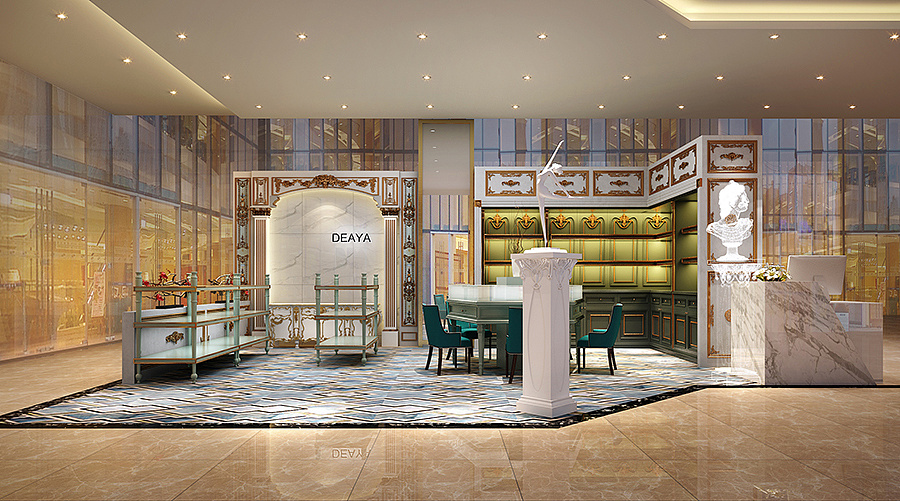
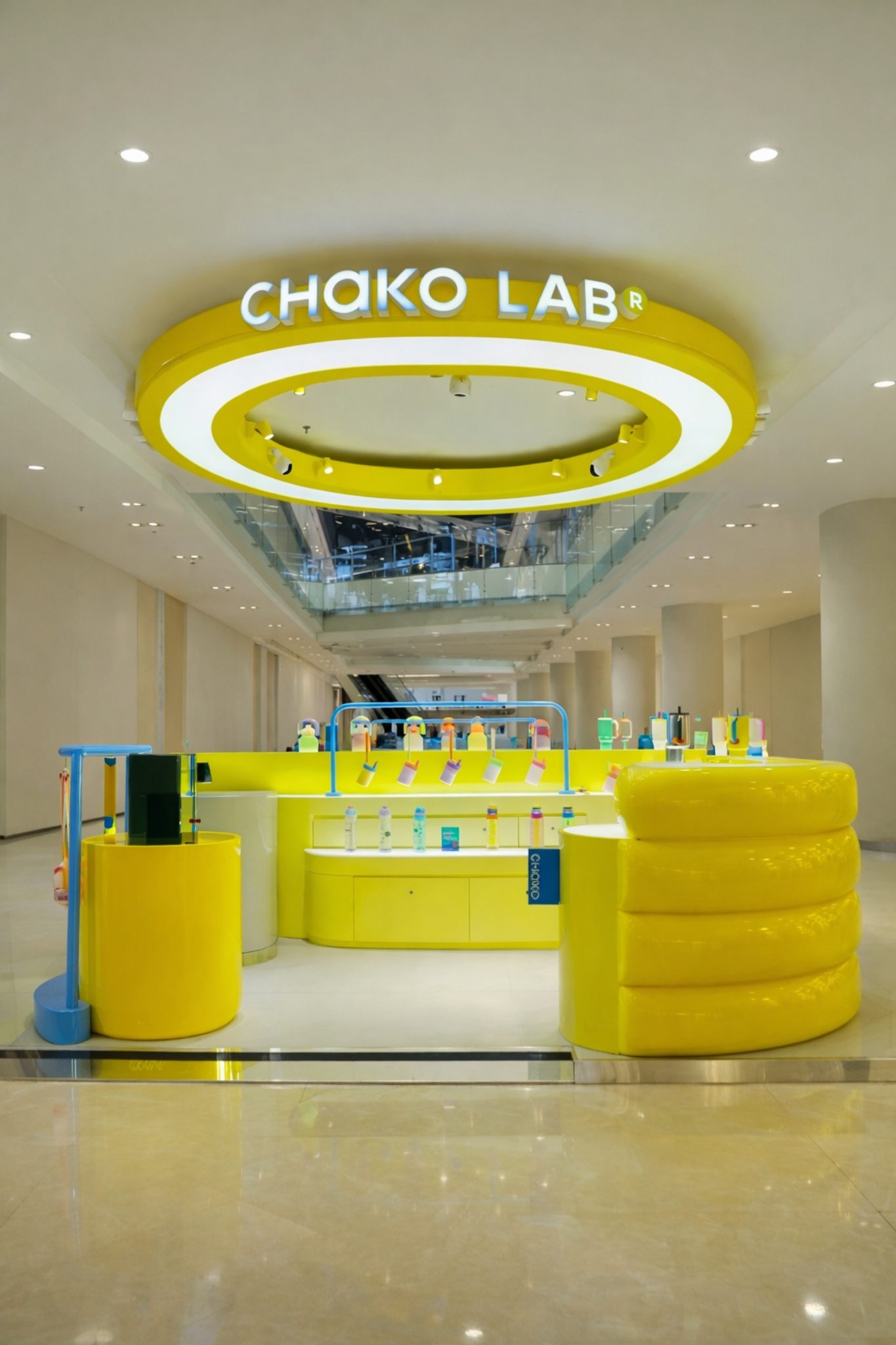
Commercial casework is sorted two ways: by face material — laminate, wood veneer or painted — and by how it is sized, either modular from a set of standard box dimensions or custom to the room. Those two choices, plus the hardware grade, account for most of the cost and almost all of the durability difference between one cabinet package and another.
The right combination depends on traffic, budget and how long the space has to last. A laminate modular package with commercial-rated hardware will outlast a veneer custom package with residential hardware in a busy back-of-house area, and cost less. In a boardroom the reverse is true. Below is how to choose.
Face materials compared
| High-pressure laminate | Wood veneer | Painted | |
|---|---|---|---|
| What it is | Resin-impregnated sheet bonded to a panel core | Thin real-wood face on a panel core | Sprayed finish over MDF or primed substrate |
| Cost | Lowest | Highest | Middle to high |
| Wear resistance | Very high | Moderate | Lowest at edges and corners |
| Repairability | Poor — replace the panel | Good — can be refinished | Good — can be touched up and resprayed |
| Colour and pattern range | Very wide, including wood prints and stone prints | Limited to species and cut | Unlimited |
| Consistency between units | Excellent, sheet to sheet | Varies; needs sequencing to match | Excellent |
| Best for | High-traffic, wet, back-of-house, multi-site rollouts | Feature items and executive spaces | Curved and shaped work, brand colours |
Laminate casework is the default for commercial work. The face is harder than the surfaces that attack it, it is dimensionally stable, it cleans with a commercial cleaner, and it is repeatable — the same colour code ordered two years later matches. Its weaknesses are the edges and the corners, which is where the edgeband specification matters more than the laminate does.
Veneer casework gives real wood grain, which no print fully reproduces at close range. It also brings obligations: veneer needs sequence-matching across adjacent panels or the run reads as patchy, it moves with humidity, and it needs a protective topcoat sized for the use. In retail it belongs on the items the customer stands in front of, not on stockroom shelving.
Painted casework is what you use when the shape is not flat or the colour is not available in a laminate. Brand colours, curved fronts and shaped fascias are all paint work. The trade-off is durability: a painted edge chips where a laminated edge does not, and a busy counter front will show it within a year unless it is protected.
Modular casework versus custom casework
Modular casework is built from a defined set of box sizes — a fixed list of widths, two or three depths, a standard height — combined into runs and topped with a continuous counter. The engineering is done once per box type, repeat and replacement units are straightforward, and a damaged cabinet can be swapped without touching its neighbours.
Custom casework is sized to the room. Nothing is standard: widths absorb the actual wall length, heights suit the actual ceiling, and the geometry can follow a curve or a slope.
Where each is the right call:
- Choose modular for multi-site programs, back-of-house and storage-driven rooms, and anywhere a facilities team will maintain or replace units years later. It is also the answer when the budget is fixed and the quantity is high — cost per cabinet falls with volume in a way custom work never does.
- Choose custom where the cabinet is part of the architecture, where the space is irregular, where equipment has to be integrated, or where a continuous front is part of the design.
- Mix them on most real jobs: modular boxes behind a custom front, or a modular run flanked by custom end panels and fillers. That is how most of our store fixtures are built.
One caution with modular: it only saves money if the design respects the module. A "modular" package where every third unit has been resized to suit a wall is a custom package with extra drawing work.
Grade levels in the architectural woodwork standards
The architectural woodwork standards used across North America describe three grades of work. They are quality tiers, not product names, and they cover allowable tolerances, joinery methods, permitted materials, edge treatment and finish quality. Described generally:
- Economy grade — the basic tier. Wider tolerances, simpler joinery, and the fewest restrictions on materials and concealed surfaces. Appropriate where the work is utilitarian and out of sight.
- Custom grade — the tier most commercial fit-outs specify. Tighter tolerances than Economy, better joinery, more control over face and edge materials and over finish quality. This is the normal default for retail, office and hospitality casework.
- Premium grade — the highest tier. The tightest tolerances, the most rigorous joinery and material requirements, and the strictest finish criteria. Used for feature items and high-visibility architectural woodwork.
A useful discipline is to specify grade per item rather than per project: Custom for the general casework, Premium for the reception desk, Economy for the stockroom. Specifying Premium across a whole package raises the price of shelving nobody will see.
Elite Fixtures builds to the grade a project's specification calls for and describes the work in those terms. We do not claim membership in or certification by any woodwork association, and buyers should treat "built to Custom grade" and "certified" as different statements.
Hardware grades
Hardware is the part of a cabinet that fails first, and it is the easiest place for a price to be quietly reduced. The three things worth writing into a specification:
Hinges. Concealed European hinges are rated by cycles, and residential-level hinges are tested to a much lower count than commercial ones. On a door opened dozens of times a day the difference shows up inside a year. Specify a cycle rating, soft-close if you want it, and an opening angle if the door has to clear a drawer beside it.
Drawer slides. Rated by load, by extension (three-quarter, full or over-travel) and by mechanism (ball-bearing side-mount or undermount). For a counter drawer holding paperwork, a light full-extension slide is fine. For stock, tools or equipment, specify the load rating and expect ball-bearing undermount slides.
Locks, pulls and levellers. Locks should be keyed to a plan agreed with the tenant, not supplied as random cylinders. Pulls take direct abuse and should be metal and through-fixed on any public-facing unit. Adjustable levellers matter more than they sound: a floor out by several millimetres over a run is common, and levellers keep the counter line straight.
Durability trade-offs in high-traffic spaces
Where a cabinet package fails, it usually fails in the same few places. What to specify against each:
- Edges. The most common failure point. Specify a thicker edgeband — 2 mm or 3 mm rather than the thin default — on every exposed edge of a public-facing unit. Laser-applied edgebanding also resists the dark glue line that opens up on cleaned surfaces.
- Toe-kicks and bases. Cleaning equipment hits them daily. Specify a stainless or aluminium kick plate, or a laminate-clad kick on a moisture-resistant core, and keep paint off the base.
- Counter fronts at standing height. Belt buckles, carts and shoes all land here. A protective rail or a harder face material is cheaper than replacing the panel.
- Wet areas. Specify a moisture-resistant core under sinks and behind coffee equipment, with a sealed cut-out edge. A standard particleboard core that gets wet swells permanently.
- Shelf deflection. Long shelves sag. Shorten the span, thicken the panel or add a front edge stiffener — and state the intended load, because shelving specified for display will not hold cases of stock.
- Adjustability. A high-traffic space gets reorganised. Pinned or notched standards let shelves move; a fixed shelf guarantees a future modification.
For food and beverage counters the wet-area and toe-kick decisions matter most; they are covered on our café counters page. Where casework sits inside broader site work — walls, flooring, services — see commercial renovation.
How this gets bought
Casework decisions are made in the specification and confirmed in the shop drawings — that is where core material, edgeband thickness, hardware model and finish codes become commitments. If the line between the cabinet package and the wider woodwork package is still unclear, read casework vs millwork first.
We fabricate at our own factory in Huizhou, Guangdong. In the Greater Toronto Area — Toronto, Markham, Scarborough, Mississauga, Vaughan and Richmond Hill — we design, build and install, with $2,000,000 commercial general liability insurance and WSIB coverage for Ontario site work; custom millwork in Toronto is the page to start from. Outside Canada we fabricate, crate and ship by sea, and the client's own contractor installs. Dates are confirmed after drawings are approved: see the lead-time page.